BROWSE Columns


✕


5/Ode to the Air
Walking on a road
I found the air,
greeting it, I told it
with respect,
“I’m glad that for once
you leave your transparency,
so we’ll talk.”
Tirelessly, it
danced, moved the leaves,
it shook, with its laughter
the dust from my soles,
and raising
all of its blue rigging,
its glass skeleton,
its eyelids of breeze,
motionless as a mast
it kept listening to me.
I wrapped myself
in its flag
of heavenly silk,
and I told it:
monarch or comrade,
thread, corolla or bird,
I don’t know who you are but
I ask you one thing,
don’t sell yourself.
The water was sold
and the pipes
in the desert
I’ve seen
and the poor people
of the world, the people
walk with your thirst,
reeling in the sand.
I saw the light of the night
rationed,
the great light in the house
of the rich.
Everything is a dawn
in the new
suspended gardens,
everything is obscured
in the terrible
shadow of the alley.
From the night,
mother stepmother,
with a dagger in themiddle
of its owl eyes,
and a scream, a crime,
get off and up
swallowed by the shadow.
No, air,
don’t sell yourself,
that they do not channel you,
that they do not insert tubes in you,
that they do not fit you
nor compress you,
that they do not make tablets of you,
don’t get put in a bottle,
be careful!
Call me
when you need me,
I am the poet son
of poor, father, uncle,.
brother, full brother
and brother-in-law
of the poor, of all,
of my country and of the others,
of the poor who live by the river,
and those who in the height
of the vertical mountain range
crushing stone,
nailing boards,
sewing clothes,
chopping wood,
grinding earth,
and so
I want them to breathe,
you are the only thing they have,
that’s why you are transparent,
for you to see
what will come tomorrow,
or that you exist,
air,
let yourself breathe,
do not chain yourself,
do not trust anyone
arriving by car
to examine you,
leave them,
laugh at them,
blow their hat off,
do not accept
their propositions,
let’s go together
dancing around the world,
knocking down the flowers
of the apple tree,
entering the windows,
whistling together,
whistling melodies
of yesterday and tomorrow,
a day will come
in which we will release
light and water,
the earth, the man,
and everything for everyone
will be as you are.
That’s why, now,
be careful!
and come with me,
we have a lot left
that dance and sing,
come on
along the sea,
at the top of the mountains,
come on
where it is blooming
the new spring
and in a gust of wind
and singing
let’s share the flowers,
the aroma, the fruits,
the air
of the morning.
5/Oda al Aire
Andando en un camino
encontré al aire,
lo saludé y le dije
con respeto:
“Me alegro
de que por una vez
dejes tu transparencia,
así hablaremos”.
Él incansable,
bailó, movió las hojas,
sacudió con su risa
el polvo de mis suelas,
y levantando toda
su azul arboladura,
su esqueleto de vidrio,
sus párpados de brisa,
inmóvil como un mástil
se mantuvo escuchándome.
Yo le besé su capa
de rey del cielo,
me envolví en su bandera
de seda celestial
y le dije:
monarca o camarada,
hilo, corola o ave,
no sé quien eres, pero
una cosa te pido,
no te vendas.
El agua se vendió
y de las cañerías
en el desierto
he visto
terminarse las gotas
y el mundo pobre, el pueblo
caminar con su sed
tambaleando en la arena.
Vi la luz de la noche
racionada,
la gran luz en la casa
de los ricos.
Todo es aurora en los
nuevos jardines suspendidos,
todo es oscuridad
en la terrible
sombra del callejón.
De allí la noche,
madre madrastra,
sale
con un puñal en medio
de sus ojos de búho,
y un grito, un crimen,
se levantan y apagan
tragados por la sombra.
No, aire,
no te vendas,
que no te canalicen,
que no te entuben,
que no te encajen
ni te compriman,
que no te hagan tabletas,
que no te metan en una botella,
cuidado!
llámame
cuando me necesites,
yo soy el poeta hijo
de pobres, padre, tío,
primo, hermano carnal
y concuñado
de los pobres, de todos,
de mi patria y de las otras,
de los pobres que viven junto al río,
y de los que en la altura
de la vertical cordillera
pican piedra,
clavan tablas,
cosen ropa,
cortan leña,
muelen tierra,
y por eso
yo quiero que respiren,
tú eres lo único que tienen,
por eso eres
transparente,
para que vean
lo que vendrá mañana,
por eso existes,
aire,
déjate respirar,
no te encadenes,
no te fíes de nadie
que venga en automóvil
a examinarte,
déjalos,
ríete de ellos,
vuélales el sombrero,
no aceptes
sus proposiciones,
vamos juntos
bailando por el mundo,
derribando las flores
del manzano,
entrando en las ventanas,
silbando juntos,
silbando
melodías
de ayer y de mañana,
ya vendrá un día
en que libertaremos
la luz y el agua,
la tierra, el hombre,
y todo para todos
será, como tú eres.
Por eso, ahora,
cuidado!
y ven conmigo,
nos queda mucho
que bailar y cantar,
vamos
a lo largo del mar,
a lo alto de los montes,
vamos
donde esté floreciendo
la nueva primavera
y en un golpe de viento
y canto
repartamos las flores,
el aroma, los frutos,
el aire
de mañana.
—Pablo Neruda
Ode to the Dictionary
Beef tenderloin, heavy
loader, thick
systematic book:
as a youth
I ignored you,
you dressed me
insufficiency
and I thought I was
full and plump
like a melancholic toad.
I ruled: “I received
words directly
bellowing from Sinai.
I will reduce
forms to alchemy.
I am a wizard.”
The great magician was silent.
Dictionary,
old and heavy, with his coat
of worn skin,
fell silent
without showing its testing.
But one day,
after having used
and disused it,
after declaring
it a useless
and anachronistic camel,
when for long months,
without protest, it served me
as an armchair and pillow,
it rebelled and planted
itself at my door,
grew, moved its leaves
and their nests, moved
the elevation of its foliage:
the tree was,
a natural,
generous
apple tree,
apple tree of apple trees,
and the words
shone in its inexhaustible cup,
opaque or voiced, fertile
in the foliage of language,
loaded with sound and truth.
I set aside
only
one of its pages:
Capuchón (cap),
Caporal (foreman),
what a wonder to pronounce
these three syllables
with air,
and farther down,
Capsula (capsule),
hollow, waiting for oil
or ambrosia,
and next to them,
Captura (capture), Capucete (hood), Capuchino (cappuccino),
Captatorio (captivating), Caprario (goat),
words
that glide like soft grapes,
or that explode in the light
like blind gems what waited
in the basements of vocabulary
and live again and give life:
once again burns in the heart.
Dictionary,
you are not a tomb,
a grave, a coffin,
a tumulus, a mausoleum,
but a preserve,
hidden fire,
ruby plantation,
living perpetuity
of essence,
a language barn.
And it is beautiful
for you to pick up
in your ranks
the word
of lineage,
the severe and forgotten
judgement,
daughter of Spain,
hardened
like a plowshare,
fixed at its limit
as an old fashioned tool,
preserved
with its exact beauty
and the firmness
of a medal.
Or the other word
we saw lost
there between the lines
and that suddenly tasty
and smooth in our mouth like almond
or as tender as a fig.
Dictionary, one hand
of your thousand hands,
one of your
thousand emeralds,
a single drop
of your
virginal
springs,
a grain
of your magnanimous barns
just
at the right moment
leads from
my lips to the thread
of my pen,
to my inkwell.
From your thick
and sonorous jungle depths,
give me,
when I need it,
a single trill,
the luxury of a bee,
a fallen fragment
of your ancient scented wood
for an eternity
of jasmine trees,
one
syllable, a tremor,
a sound, a seed:
I am of the earth and with words I sing.
54/Oda al Diccionario
Lomo de buey, pesado
cargador, sistemático
libro espeso:
de joven
te ignore, me vistió
la suficiencia
y me creí repleto,
y orondo como un
melancólico sapo
dictaminé: "Recibo
las palabras
directamente
del Sinaí bramante.
Reduciré
las formas a la alquimia.
Soy mago."
El gran mago callaba.
El Diccionario,
viejo y pesado, con su chaquetón
de pellejo gastado,
se quedó silencioso
sin mostrar sus probetas.
Peroun día,
después de haberlo usado
y desusado,
después
de declararlo
inútil y anacrónico camello,
cuando por largos meses, sin protesta,
me sirvió de sillón
y de almohada,
se rebeló y plantándose
en mi puerta
creció, movió sus hojas
y sus nidos,
movió la elevación de su follaje:
árbol
era,
natural,
generoso
manzano, manzanar o manzanero,
y las palabras,
brillaban en su copa inagotable,
opacas o sonoras
fecundas en la fronda del lenguaje,
cargadas de verdad y de sonido.
Aparto una
sola de
sus
páginas:
Caporal
Capuchón
qué maravilla
pronunciar estas sílabas
con aire,
y más abajo
Cápsula
hueca, esperando aceite o ambrosía,
y junto a ellas
Captura Capucete Capuchina
Caprario Captatorio
palabras
que se deslizan como suaves uvas
o que a la luz estallan
como gérmenes ciegos que esperaron
en las bodegas del vocabulario
y viven otra vez y dan la vida:
una vez más el corazón las quema.
Diccionario, no eres
tumba, sepulcro, féretro,
túmulo, mausoleo,
sino preservación,
fuego escondido,
plantación de rubíes,
perpetuidad viviente
de la esencia,
granero del idioma.
Y es hermoso
recoger en tus filas
la palabra
de estirpe,
la severa
y olvidada
sentencia,
hija de España,
endurecida
como reja de arado,
fija en su límite
de anticuada herramienta,
preservada
con su hermosura exacta
y su dureza de medalla.
O la otra
palabra
que allí vimos perdida
entre renglones
y que de pronto
se hizo sabrosa y lisa en nuestra boca
como una almendra
o tierna como un higo.
Diccionario,una mano
de tus mil manos, una
de tus mil esmeraldas,
una
sola
gota
de tus vertientes virginales,
un grano
de
tus
magnánimos graneros
en el momento
justo
a mis labios conduce,
al hilo de mi pluma,
a mi tintero.
De tu espesa y sonora
profundidad de selva,
dame,
cuando lo necesite,
un solo trino, el lujo
de una abeja,
un fragmento caído
de tu antigua madera perfumada
por una eternidad de jazmineros,
una
sílaba,
un temblor, un sonido,
una semilla:
de tierra soy y con palabras canto.
—Pablo Neruda
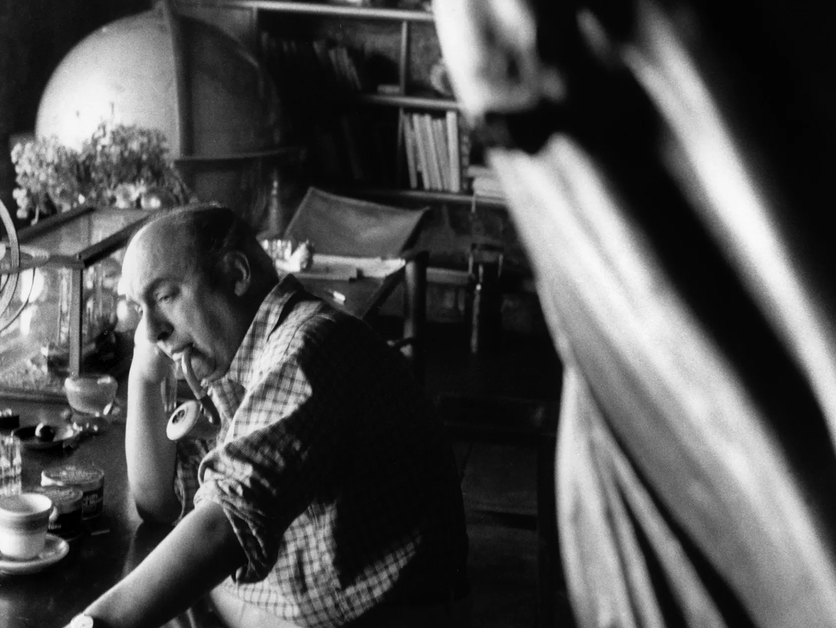
Pablo Neruda (born July 12, 1904, Parral, Chile—died September 23, 1973, Santiago) was a Chilean poet, diplomat, and politician who was awarded the Nobel Prize for Literature in 1971.

Wally Swist’s new books include Aperture (Kelsay Books), poems regarding caregiving his spouse through Alzheimer’s, and If You’re the Dreamer, I’m the Dream: Selected Translations from Rilke’s Book of Hours (Finishing Line Press). Poems, essays, and translations have appeared in Chicago Quarterly Review, Commonweal, Healing Muse, La Piccioletta Barca, Montreal Review, North American Review, Pensive, Poetry London, Rattle, Upstreet and Your Impossible Voice. Huang Po and the Dimensions of Love (Southern Illinois University Press, 2012) was selected by Yuseff Komunyakaa as co-winner of the 2011 Crab Orchard Open Poetry Competition. He was also the winner of the Ex Ophidia Press Poetry Prize in 2018 for A Bird Who Seems to Know Me. Books of nonfiction include Singing for Nothing: Selected Nonfiction as Literary Memoir (Brooklyn, NY: The Operating System, 2018) and On Beauty: Essays, Reviews, Fiction, and Plays (New York & Lisbon: Adelaide Books, 2018). Wild Rose Bush: The Life of Mary and Other Poems by Rainer Maria Rilke was selected as an honorable mention in the 2025 Stephen Mitchell Prize for Excellence in Translation sponsored by Green Linden Press. Bainbridge Island Press will be publishing the most recent collection of his poetry, Discovering What to Say.


