BROWSE Columns


✕
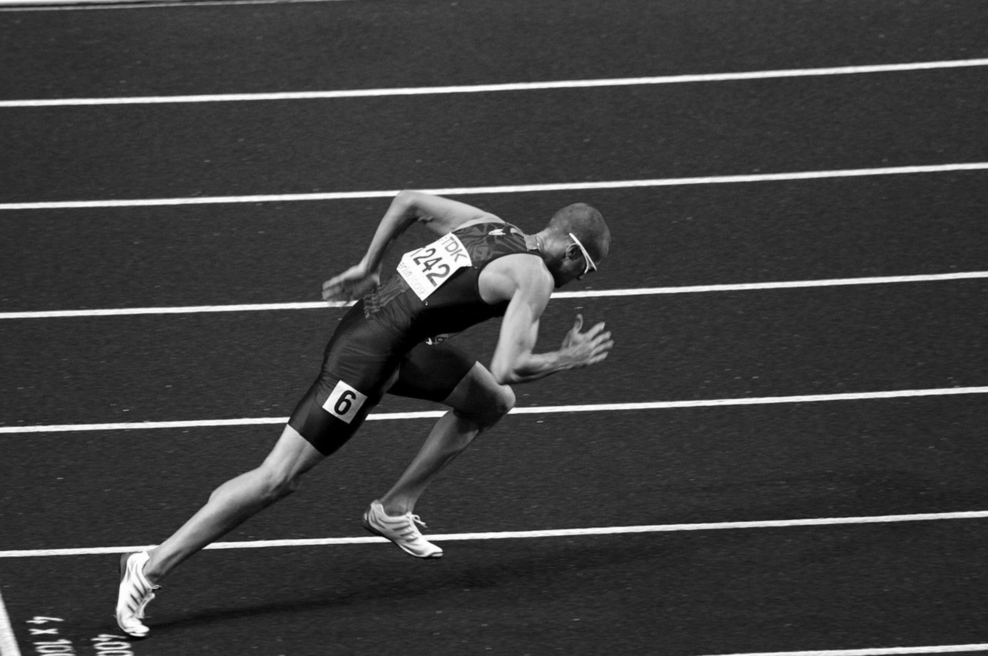


When you're in late teens-early twenties, that racing, stretched out blur between school and what comes next, your ambition exists at a safe distance to you, your hopes and dreams always shifting into the safety of a deferred future, moving away from you at the same speed you're moving towards it, changing with each birthday, which you still mark with excitement. Every new inspiration takes to you completely, you can build aspiration as big as you like, you feed it constantly but it's only potential it's not real, the promise of youth, there are no consequences, you haven't achieved anything anyone can judge you on yet, even if you reveal your plans to your mum and dad, the safe circle of friends, you know they'll change. Death and posterity can't come soon enough, because you know, you tell yourself every night, energised by thought, unable to sleep, turning the light back on and finding a scrap of paper, on/off again and again, writing it down to read in the morning, to remind yourself, so you don't forget this restlessness, so you keep it alive. You'll keep to your word, you won't betray yourself. You don't want a normal life, you won't settle, I'll never loose my ambition, I'll never end up like my parents, everyone older than me, who know better. “Yes, but you're young, I used to be the same”. Don't say, “Things will be different when you get older.” I used to pity you. How is it you can't avoid these cliches of ageing, say something new? They're all true, you can't skirt them, they inevitably catch up with you.
Thinking back to her adolescence in Recollections of My Non-Existence, Rebecca Solnit wrote, “You might become many things that you are not yet, and it is intoxicating when it's not terrifying.” You can be anything and everything. You see all these different pathways laid out in front of you. Your every vision of the future is the culmination of success, already written into biography, like Woolf's Orlando, your travails followed by a glorious stream of ink: “From deed to deed, from glory to glory, from office to office he must go, his scribe following after, till they reach what seat it may be that is the height of their desire.”
I wanted to be a track star, Wanderer above the Sea Fog, Ozymandias. I wanted to be like Jeremy Wariner running in slow-mo, chain bouncing off my chest, arms raised above my head crossing the line first, taking in the adoration of the crowd. I remember a chapel sermon at school, all along the pews, paper cut outs of Caspar David Friedrich's famous painting. I still have mine, which I use as a bookmark. Something about vainglorious man foolishly thinking he can conquer nature, the fog curtailing his view. “Only God can show us the infinite”, said the chaplain, but I liked that the Wanderer tried anyway. I imagined him stuck up there astride the mountain, realising he never learnt to down climb and deciding to stay gazing out into the haze until he succumbs to exposure. I wanted it to end in “colossal” defeat like Shelley's deluded King of Kings, “boundless and bare / The lone and level sands stretch far away.”
At 6 months' old, I had a severe asthma attack and I had to breathe through a nebuliser because I couldn't get enough air on my own. My mum was very worried she told me later. I was hospitalised again at around 6, this time kept in for about a week. I remember my dad and brothers came to visit me late one evening with a box of Celebrations. I became friends with another boy on the ward, he had a chronic condition and had basically lived there, and I remember he cried when I could go home. At age 11 I grew out of my asthma and suddenly I had this enormous lung capacity. Primary school cross country races, I went from 10th to 1st in two years, from trailing far behind the front pack, from losing my boot in the mud, to sporting colours. I was incredibly lean back then, I basically didn't have any fat reserves. My metabolism was in constant overdrive. Coming up to meal times I'd start shaking with hunger. My event was the 400 metres, like USA's Jeremy Wariner, who was the best in the world at the distance. At 17 almost 18, in my final year at school, the night before Athletics Day I barely slept, all I could think about was getting a good start. My back leg bouncing up and down before the firing gun. I remember the final bend. Angling my toe in, treading the curve of the line, this beautiful feeling like the world is being pulled past you, risking disqualification, any closer it's over, obliteration. The ground is receding under foot, coming into the home straight, trying to look as relaxed as possible while your opponent is getting out of shape, gasping for air, sick rising in his stomach. I'm letting my face droop, making it look easy, like I'm slowing because I want to, the whole school watching from the stands. Running is a kind of performance. I look over my shoulder, check to see if I can ease up, letting everyone know that you know thereʼs no one there. I hear the announcer over the tannoy, “This is Broome, striding towards the finish line!” 400 metres 1st, Long Jump 1st, 200 metres 3rd but only just though, dipping at the line like Iʼd seen them do on TV, that was the one that got me the Victor Laudorum, one point clear on the leaderboard. The cup was mine to keep.
As the years progressed, I began to realise I'd have to choose what I wanted to be from what talents I had. Every night after dinner, I used to practice guitar for hours until my mum would come up and tell me she was going to bed and Iʼd have to stop now. I half-imagined myself as a concert guitarist. I'd use my laptop to video myself playing, just the top hand, recording difficult finger patterns and chord transitions, so I could watch it back and perfect them later. I wrote one good song when I was 16 and I never produced anything better after that. As I got older, guitar just stopped meaning so much to me. I stopped developing because I stopped practising but, I think before then, I stopped practising because I stopped developing. In the end, I was only a good school-boy runner too, local athletics competitions I got regularly humbled by state-school boys, they had tattoos and massive traps, they already looked like men, county boys were on another level, and regional athletics didn't bother with mid-week meets. What was the point travelling in a mini-bus just to come 4th? You realise, you can't just will your ambition into a reality, success was not a given, and gradually, there are fewer and fewer pathways open to you. You can't be interested in everything, there is no time, you have let some hobbies die.
I did not know I wanted to write from an early age. I was never really even into books as a kid. I had to be made to read my dad reminds me. I never liked to be taught, sat down and told what to do. I have to discover for myself. By age 4 or 5 I came to view reading as a form a disciplining, a punishment for being too noisy, for fighting with my brothers, for not finishing my supper. During the summer holidays, an exhausted nanny, whichever one it was, they changed a lot, she'd scream “Right!”, her voice cracking at the top of the note, “All three of you! Go to your rooms and read. You can't leave for at least an hour.” I'd play with my soldiers by the door, quietly waiting for the call from downstairs.
Middle school, I remember my English teacher Mr Dillion, who used to walk around twiddling his fingers by his sides, giving me praise for my writing. Leading up to our GCSEs, he set us an assignment to write in the style of a popular periodical. I was given Sugar, the teenage girl's magazine. I remembering loving the exercise, adopting a voice, taking on its styles and conventions, immersing myself in a fully formed world, I wasn't inventing anything, it felt like a form of copying, but I liked it, somehow speaking from outside myself. For first time ever, I got top of the class. After that I knew I wanted to become some kind of writer but I didn't know what I wanted to write about. I was not composing plays for my family at a young age like Briony in Ian McEwan's Atonement, which we read for our A-level English Literature exam. I don't have a compelling backstory for why I write. I was not destined to do it. But then, in my final years at school, I started to read beyond the syllabus, hiding secret notes in a shoe box under my bed, and something intricate and many-chambered slowly opened within me.
First, I wanted to be a journalist. For a few years, I was a member of the National Union of Journalists – and I believe good reporting performs a vital social function in holding power to account – but I was never really a proper journalist, I hated having to provide counter quotes, the need for neutrality, complete concision. “This is fine but we need to remove the first-person observations”, news editors would say. Then, I decided I wanted to write about art. I already had an undergrad in Art History but took a master's degree because I thought I didn't know enough and wasn't ready to write for public audience. I took to Paolo Uccello, Manet, James Coleman, completely and permanently, but also it gave me a concrete set of theoretical frameworks: parergon, heterotopia, medium specificity. Reviewing exhibitions, I quickly felt I could only speak through an artwork, in the third person, through the artist's vulnerabilities and confessions. Yes, criticism is not simply a process of translation but also transformation. As Oscar Wilde writes in the preface to The Picture of Dorian Gray, “The artist is the creator of beautiful things” but “the critic is he who can translate into another manner or a new material his impression of beautiful things.” I felt as though the limits of what I could say were predetermined, limited to explaining the artist's intentions and the work's wider context, a derivative of the exhibition press release. I resented reviewing, because even if you dislike a work of art or a novel, you still have to get in the artist's headspace, to take their position at its fullest. Gradually, it felt oppressive.
I wanted to write from within myself but I was frozen by death. Growing up, my dad only spoke about three things: death, divorce and money. On his allocated weekends, he'd take me and my brothers to eat takeaway sandwiches in the church graveyard. We'd sit on the bench reading headstones. “Look, he was only 48. You've got to make your mark while you can”. Sometimes, I think now, Dad, please ring me up and tell me I'll be dead soon. But it wasn't his fault though. This morbid appeal comes from within, I've always loved the futility of trying to escape death, the inevitability, all of life's events foreshadowed that way, those operatic, ill-fated stories, where characters' lives are set on a tragic path from the moment they are introduced, almost defying everything and achieving salvation only to make their death grander when it finally arrives.
I have a notebook of self-directives, which is titled “Newgate to Tyburn” after a John Donne sermon. Speaking from the pulpit on Easter Sunday in 1619, he asked the congregation, “Now was there ever any man seen to sleep in the cart, between Newgate and Tyburn? Between the prison, and the place of execution, does any man sleep? And we sleep all the way; from the womb to the grave we are never thoroughly awake.” This notebook contains rules for life, aspirations, statements I want to hold myself to, things to stop doing, but also things I wish I could do and be: “No social media / opening notifications before getting out of bed on week days”, “Pose seriously for the camera” (inspired by a note Susan Sontag wrote to herself telling herself to “smile less”), “Read more about love and longing”, “Do things that make you feel unexpectedly good when you're feeling tense, e.g. dance class or poetry reading groups”. This book is like my bible, I am writing to myself in the future, I can't write something down and not do it, because writing becomes a kind of promise to yourself, if you write something down you've got to do it. Writing is committing. Every new draft, every unique new file name, trying to extend your thoughts through writing, you're committing to the next draft until you publish and then you search out another distant light inside of yourself, that you've known has been there but couldn't locate until now.
I was dreading turning 30. It's a significant milestone. In the lead up to it, you look back on everything youʼve done, everything you imagined you'd do. The day would be a confirmation of failure, all the unrealised ambitions. 30 is the time for results, to climb the career ladder as my parents told me, to become a part of the “ingenious clock-work” Schiller describes, pieced together from “innumerable but lifeless parts”. But the pressure didn't really come from outside, from family, from the capitalist need to specialise. I'd realised I hadn't done the things I wanted to do, I hadn't really written anything from myself. I'd actively put it off, pursuing further education instead. I was still hiding behind criticism, obsessing over writing from the right distance, going to galleries to review a show and avoiding contact with the curator to keep my critical independence from being compromised. I'd got so bound up in critical theory, adopting different writing characters none of them really directly my own. F.E. Sparshott says, like lawyers, critics should be admired for the intelligibility of their case not the verdict it supports. Michel de Certeau says the critic is “a savvy poacher, stealing and reinterpreting the words of others, making raids on property he does not own.” But then Terry Eagleton says “Disinterestedness involves being in the thick of the affray, [...] not loitering in no man's land where you would be incapable of knowing anything.” To write allowing yourself to show the words exerting themselves on you, you're surrendering yourself completely, you're saying “You can judge me however you want. You can do anything with me”, and I wasn't sure I wanted that yet, it was too easy to keep putting off the danger. To stay protected required no further action.
Two years ago now, when 30 came, it was a release. I was free from forward-looking. Suddenly, your hopes are playing out everyday, in the very real danger of the present where you get crushed as soon as you give up, not from any external forces, from the inside out, your heart would implode. How could you ever recover from that? When I told Naomi, who I've known 10 years since we all studied together at UCL, that 6 months ago I was thinking about retraining as a lawyer, she seemed genuinely hurt for me. “No, don't do that”, she said quickly without a pause. “You've already come so far and it seems like youʼve got more and more horizon to say what you want in your writing. Good you decided against law.” The reward is the risk, it's another kind of death-drive, you have to tell yourself itʼs okay, reassure yourself, because one wrong step and you'll fall straight off the edge. I'm not creating false jeopardy, to make up for abandoning youthful illusions. You reach a phase of life when moving forward comes out of “daily increments of hundreds upon hundreds of bits of inspiration”, like Aschenbach describing his writing process in Death in Venice, small-scale achievable notions, WEEK-TO-DO lists, “Please return any edits by Monday EOD”. You don't have the head space to see if you're progressing, but you no longer care, “Sounds like incremental grind”, Alexander said to me. That's not incremental grind. You're doing it. Every day you end it knowing you're trying to do what you set out to do.
This moment doesn't have to come at 30, it could be any age, but it doesn't just happen. You have have to make a decision. Somehow you've got to stop and get perspective when life is whirling around you. There's a moment in I Love Dick when Chris Kraus/the narrator, who is nearly 40, is driving east across US time zones, and she says she feels like she's being “sucked into a time tunnel.” She's literally losing time she notices. She likens it to the spatial illusion when you're sitting in traffic, cars either side, and you panic because you think your car is moving by itself but then you realise you're stationary and it's the cars next to you that are moving. You've got to have that moment if you're going to get perspective, to do what Kraus does, leave your marriage, start a frivolous, parasocial love affair, to write freely. For fifteen years, Kraus says, “I had to find these ciphers for myself”. “Now I can't stop writing in the 1st Person, it feels like it's the last chance Iʼll ever have to figure some of this stuff out.”
I finally saw, I had been looking so far ahead I hadn't noticed I wasn't moving, I had been mistaking progress for the passage of time, staying up at night writing my own storied obituary, I've been dishonest with myself, I had been putting off doing the difficult thing, suppressing my true feelings. I'm trying to force myself to be ok with showing my workings, publishing incomplete ideas, because no one judges you as harshly as you do, because actually no one cares about your work as much as you do. I can not entirely love a piece when I look back on it, it's about writing on the move and not for some hypothetical future, because the future is getting eaten up each day you're waiting. I've decided its ok laying bare my naiveties, living in the short-to-medium term. It's not that the words pour out of me now, I still write slowly, but I can get at myself more. I write about writing because my writing is still coming of age, because I have to repeatedly tell myself, put it down on paper so I can reference back to it, so I'm held to the words.

Henry is a writer and critic from London, with bylines BOMB Magazine, Art Monthly, and Flash Art, writing on public art and the poetics of cityscapes, abandoning inhibition and the way desire shifts perspective. Website henrybroome.xyz. Instagram @broomehenry.com.


