BROWSE Columns


✕
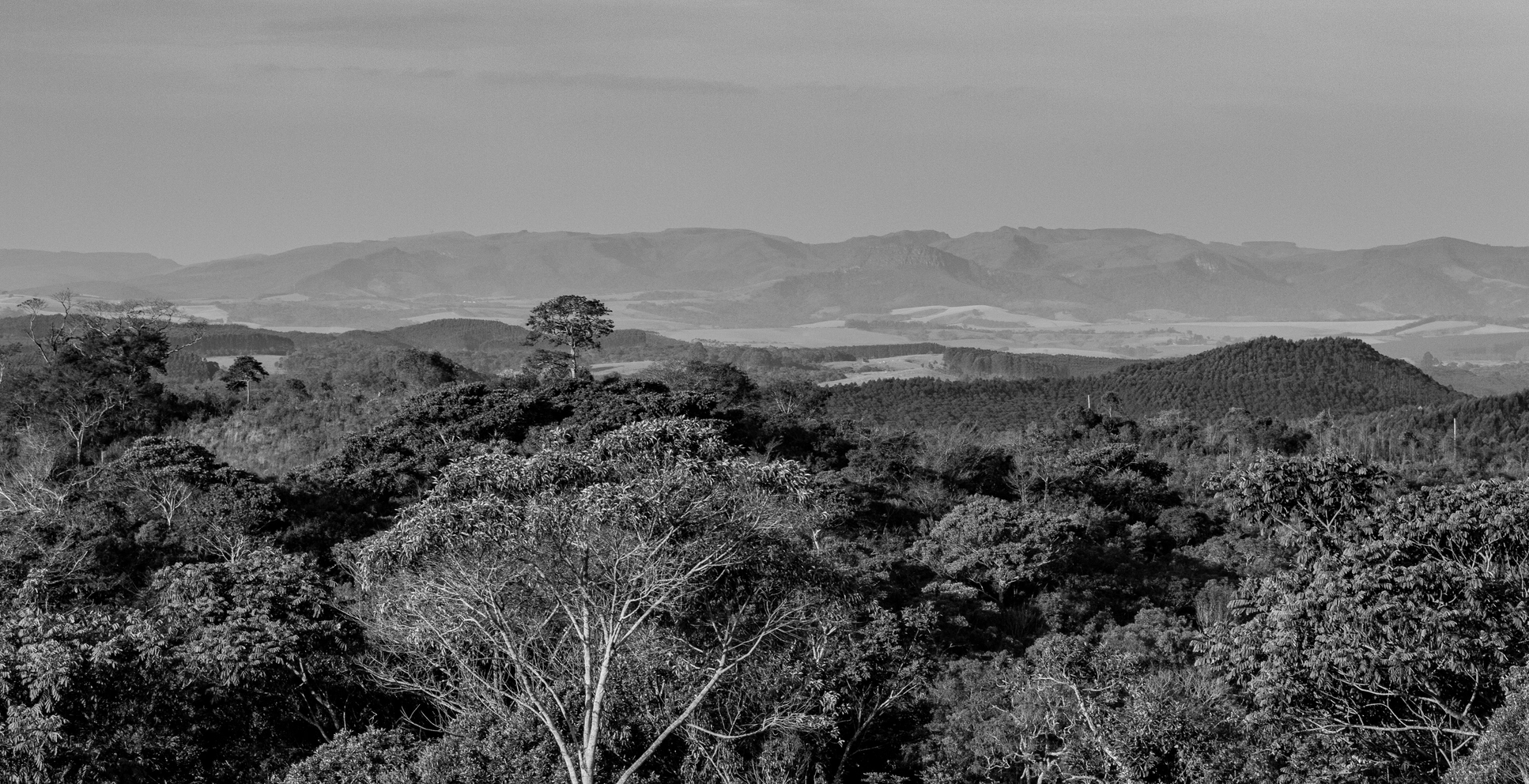


1. In his famous essay The Great Derangement, Amitav Ghosh denounced the inability of classical literature to focus on climate change, placing instead nature as mere background or, at most, as an inert territory to be conquered[1]. On the contrary, climate fiction focuses on the power wielded by human beings over the environment and the consequences—mostly tragic—that result from the wanton exploitation of resources.
From this suggestion stem some quite interesting concerns: the need to focus not on large-scale catastrophes (like "classic" dystopias) but on local events, the shrewdness of not using global warming as a cliché, the intersection between ecological issues and social inequality, and so on.
As a writer myself, though, I'm more interested in formal issues: I'd like to pose some questions about the possibilities of the novel in itself when it comes to this topic. If we dismiss these aspects, all in all climate fiction could be just a trend like others; of course exploring the most dramatic event of our era, but still a trend.
2. The first issue is related to what Ghosh calls "individualizing imaginary", born of Western economicist anthropology, whereby it is always and only the choices of the individual that count. Thus the novel is historically configured as an "individual moral adventure"—the expression is Updike's—essentially blocking the use of a collective character.
But in the case of global warming, the choices of single individuals remain largely irrelevant: Ghosh leads us to reconsider the narrative figure of the "We", telling about our species as connected to the entire planet, beyond a"politics that sanctifies subjectivity and in which political claims are made in the first person." Not least because—and this is very important—"in the era of global warming, nothing is really far away; there is no place where the orderly expectations of bourgeois life hold unchallenged sway."
But is the novel equipped to deal worthily with this challenge—that is, producing results of high aesthetic value? If we have not had a War and Peace of Climate Change so far, is it only because it's still too early, or it's due to editorial ignorance, or perhaps it's because the novel itself struggles to deal with this issue?
3. Before going further, it is worth stating my underlying claim clearly. The difficulties I am describing are not accidental: more in detail, they are not the result of editorial cowardice or a lack of sufficiently ambitious writers. Rather, they follow from a structural feature of narrative form itself: that whatever value judgments a story makes, it must make them in terms that are humanly comprehensible, and from a recognizably human point of view. As obvious as it may seem, it is in fact the minimal request for legibility. A narrative that truly escaped this condition would not be unreadable in the colloquial sense, but in the strict sense: a text without addressees. The pages that follow try to trace the consequences of this constraint.
A first aspect to consider is that modern novel is based on a fairly straightforward and transparent idea of direct causality: Raskolnikov kills an old moneylender and the story gets going. Sometimes it doesn't, of course: who could ever hope to summarize the causal networks of War and Peace, which Ghosh himself cites as an example of a novel that disentangles itself from the idea of "individual moral adventure"?
Nevertheless, even when grappling with events that far exceed subjective experience (such as precisely a war) what primarily interests Tolstoy and the reader is the fate of his protagonists. We want to know whether or not Andrei Bolkonsky will die after the Battle of Borodino or who will marry Natasha Rostova; and even through the complications of chance, we can identify a logic in their movements and make sense of them.
However, when causality becomes extremely more complex—when the acts are too many, or elusive, or unfold over immense time arcs—our cognitive and narrative limitations emerge accordingly. This is the fundamental problem why we don't really freak out when we think about global warming: because it is so hard to tell.
4. In a sobering article, Hannes Berghtaller clarifies that "climate, as a complex system with emergent properties, resists narrativization. The mechanisms which give rise to the changes climate scientists observe can be modeled mathematically, but to cast them in the form of a narrative is necessarily to misrepresent them."[2]
After all, we are programmed by evolution to flee before a well-localized unforeseen and unknown noise, or before an act of individual violence; but not to perceive the contours of an upheaval that transcends us to this extent. A comparison can perhaps help: the liquidation of responsibility produced by the monstrous bureaucratic machine of Nazism is an incredibly complex phenomenon that can be investigated with historical and sociological methods, but not encapsulated in a single story: instead we will continue to read Art Spiegelman's Maus or Anne Frank's diary or Primo Levi's If This is a Man. It is these fates that captivate us, move us and make us reflect: they cast light on a tragedy of incalculable scale but they retain, so to speak, a limited dimension; and so they make the horror more manifest.
Of course a novelist can create a first person plural and rely on a collective subject: Julie Otsuka's The Buddha in the Attic comes to mind, with its brilliant refusal of individualization. In this sense there's surely much to investigate, and the novel can prove itself to be more flexible than our somehow limited, parochial view.
But could it apply to "climate change" as a whole? Martin Puchner reminds us in Literature for a Changing Planet that stories about humans' interference with the climate can be already found in the Epic of Gilgamesh or in Native American cosmogonic myths and Greek mythology[3]. Unlike various floods or natural disasters, however,climate fiction emphasizes human responsibility for climate change and its consequences, based on scientific explanations. (Not least because science is now more terrifying than fiction).
5. Rather, the point is to identify plausible and interesting stories within such a broad narrative paradigm with rather blurred boundaries, without lapsing into catastrophism or mannerist dystopia. But the Western literary market often forgets that elsewhere global warming is a much more pressing and everyday reality—something akin to war, something that closely affects affections, family relationships, personal aspirations.
Introducing The Saga Anthology of Climate Fiction, Paolo Bacigalupi puts it nicely:
If I were to tell you that Lake Mead is setting record lows for its water reserves, or that Las Vegas is currently tunneling under the lake, in a multi-billion-dollar mega-project pursuit of this dwindling supply, it may not mean much to you. […] But what if I were to drop you into a life where your house was suddenly valueless? A place where your neighborhood had emptied of people overnight?[4]
So the work here is still at its beginnings. I would just use some caution: pushing storytellers to deal with an issue only because it should be at the top of our political agendas usually produces bad results: whether we like it or not, artistic inspiration doesn't depend on moral standards.
This does not mean that the artist is a monster or ignores the world that awaits him or her outside the window; simply, the argument that the urgency and enormity of a fact (like global warming) are enough to make them narratively relevant, or interesting to read, is a bad argument. One must first of all be a good writer; then, she can write good "climate fiction".
6. The second question I would like to explore is harder and goes to the heart of the novel-form: can one tell about the non-human itself, without using human characters? Is a non-anthropocentric novel possible?
In a 2009 article Dipesh Chakrabarty raised a fundamental point: the advent of the Anthropocene forces us to stop separating human and natural history[5]. The planet is not the aesthetically connoted backdrop of our affairs; we are first and foremost biological beings, and now we have crossed a line whereby we become geological agents.
Then the thinker attacks the classical view of human freedom and agency—on which, I add, the modern novel is based—as founded on the consumption of fossil fuels: "So," he asks, "has the period from 1750 to now been one of freedom or that of the Anthropocene? Is the Anthropocene a critique of the narratives of freedom? Is the geological agency of humans the price we pay for the pursuit of freedom? In some ways, yes."
Chakrabarty tackled the issue again in his 2015 Tanner Lectures, a series of very rich and articulate talks. At one point he touches an exquisitely temporal problem—and the organization of time is essential to fiction, as any storyteller knows:
The problem of intergenerational ethics both straddles and illustrates this divide: if our greenhouse gas emissions are changing the climate of the planet for the next hundred thousand years, [...] how many generations beyond us should we—or even can we—really care for? Our capacity to thus care, a capacity that has evolved over a long period of time, may not be unlimited.[6]
And that is crucial. A story capable of letting "nature" speak for itself could also involve a kind of temporality that exceeds our relational capacities. Is this possible? Can we really feel empathy for the millennial fate of a glacier, and read fiction—not an essay—about it?
7. Certainly, fiction possesses extraordinary resources and can straddle vast time arcs; but as I have already noted, it must preserve, in the moment of the single narrative sequence, rather stringent cause-effect relationships—otherwise it is very difficult for us to get our heads around it. Science has better weapons, because it abstracts from the phenomenological qualities that are instead the nourishment of every lived experience.
One could avoid the problem discarding inanimate entities, who have no agency and endure too much time, and use non-human living beings as characters. Let's put plants aside, since they are even tougher to deal with. As for animals, their differences are enormous: instinctively we use dogs or cats or wolves, but what about ants or deep-sea fish? Plus, their agencies and ways of exploring the world are often very different from ours. Thomas Nagel's warning about the inaccessibility of a bat's experiences[7], notwithstanding possible technical objections, cannot be dismissed when it comes to fiction.
Because fiction requires stepping into someone else's shoes; and if complete identification is not required (as it's impossible in any case), likewise an invention loosened from any ties of verisimilitude would not be credible. In the case of human characters it can lead to clumsy cultural appropriation, anachronisms, superficial treatments of social dimensions far removed from the writer's experience. On the contrary, fiction requires rigorous forms of empathy with one's characters based, first and foremost, on study and not on some supposed innate sensibilities. As Marguerite Yourcenar splendidly put it in her Reflections on the Composition of "The Memoirs of Hadrian", "One foot in scholarship, the other in magic arts"[8].
With animals and more so with inanimate entities, however, applying magic becomes very difficult. There is no way, it seems tome, to give them a level of agency and responsibility—the two minimum elements to build a fictional character—except at the cost of robust doses of anthropomorphism. And that's clearly a problem for a non-anthropocentric novel.
8. Delivering a speech about the non-human's ability to speak [9], Amitav Ghosh rightly pointed out that the very concept of human being has been culturally constructed: for instance, European conquerors considered American natives as less human than them. And certainly he's right to remind us that we have viewed the encounter between us and other species have often being described in terms of unrepeatable meetings and not simple processes—Buddha under the fig tree, St. Francis and animals, shamanism. Also, he underlines that "the faintest shadow of non-human presences can cause a narrative to be removed from what is taken to be the literary mainstream", confining it to genre.
Of course we have lost something in our relationship with nature. Inter-species relationships are increasingly rare and extremely undervalued; living beings are considered food or matter at our service. But I doubt that secular fiction can simply reverse this impoverishment by imaginative decree. The problem is not a failure of will or sympathy: it is a structural one. A novel that "restores agency and voice to non-humans" — to use Ghosh's own phrase — must give them our categories of agency and voice, or it gives them nothing legible at all. The restoration is simultaneously an annexation; and to the extent that it works aesthetically, it works precisely because readers recognize something of themselves in the tree or the whale. Which means that the anthropocentric circle has not been broken: it has merely been widened. I concede my Enlightenment bias, but I also defend it: the secular novel is a form built on human intelligibility, and that constraint is not merely contingent.
9. Certainly, reading for instance The Case of the Animals versus Man Before the King of the Jinn by Ikhwānal-Ṣafā one still learns a great deal: the vindication of animal rights in the face of human overpower is sensational for a 10th-century text, and as relevant as ever. Yet here animals are made similar to humans: their inarticulate cries of protest are not enough, although they should be; they must produce complex reasoning to be heard.
So isn't perhaps another kind of usurpation, to attribute them our faculties in order to make them appear? In such stories the noble aim of considering them as subjects comes at the cost of depriving them of their specificity. A visit to the slaughterhouse, in this sense, would teach more than a thousand stories.
Let's also take a couple of recent examples.
In Richard Powers' The Overstory, trees are treated as narrative agents: they possess intelligence, they send messages, they create real societies. We know that they actually communicate among each other: we know that we have long ignored this amazing net of nonhuman intelligence: and Power's ability to put it in action into a fictional world is striking. Nonetheless, the plot is largely occupied by the nine human individuals who, for one reason or another, have to deal with threatened forests; as bold and fascinating as Powers' move is, The Overstory is still tied to traditional novel.
An even more radical attempt is Irene Solá's When I Sing, Mountains Dance, the first chapter of which is for instance told from the point of view of a mass of clouds; but even here the anthropomorphism is evident. Clouds do not speak, they have no emotions: to confer them is already to make them prodigiously resemble us.
10. And after all, unless we fall into mysticism, it is impossible to do otherwise. A robust broadening of our collective imagination is certainly welcome, and is one of the novel's future challenges: but again, while we widen the field of fiction and let "nature" speak, we always hear our own background voice; foxes or clouds or earthworms return the unbearable echo of our own voice and attitudes.
Of course, among these attitudes there's the domineering relationship we have established with the world, or the relationship we have with animals (a book like Maja Lunde's The History of Bees takes this as its main theme); and yet the novel, if it is to be a novel and retain a degree of readability, still has insurmountable limits.
There is no moral judgment in this: these are the limits inherent in any human endeavor. Trying to overcome them in one leap is a form of hubris that risks producing dull and incomprehensible works albeit driven by the best of intentions. (And who ever wants to read a dull and incomprehensible novel?).
Rather, checking and renegotiating our narrative and cultural boundaries involves a more cautious study of the real possibilities of the novel-form. As Bergthaller writes, this throws into question
the meta-story about the salvific force of stories that environmental humanists are fond of telling.
For that reason, I am also skeptical toward Ghosh's call for are habilitation of the narrative impulse and a reinvention of the epic for the Anthropocene. Rather than dismissing the development of the modern novel as a process of anthropocentric constriction, I would follow Richard Walsh when he suggests that we view it «as part of a continual struggle to transcend the limits of narrative sense-making.[10]
11. Acknowledging that we are part of a world that does not belong to us, and actively working to tear down the anthropocentric pedestal on which we have comfortably sat for millennia, is imperative. Correcting our vision helps making more radical practices of environmental redemption, animalism, and sustainable lifestyles; but I doubt that narrative fiction can be enlisted as a decisive force in this struggle.
Not only, again, because moral duty works poorly when it comes to art—committed novels are generally bad novels—also because I don't see how literature can really elevate a non-human subject as the sole protagonist. To quote Berghtaller again,
narrative form is inherently anthropocentric—not in the sense that all stories would somehow assert the moral supremacy of the human species, but rather in the more basic sense that whatever value judgments they make, they must make in terms that are humanly comprehensible, and from a human point of view.[11]
But then again, who knows. The novel is flexible. It can always yield surprises. And I am a fallibilist to the core: if someone will produce an aesthetically beautiful book with non-human characters, I would be more than happy to admit I was wrong.
In fact, this is the ultimate question: can the tradition of great realist literature—from Tolstoy to Dostoevsky, Proust to Woolf, Yourcenar to Philip Roth—renovate itself by placing a non-human subject at the center of its inquiry? Is it possible to write great literature while letting the other sentient and non-sentient forms that populate the Earth speak not "for themselves" but at least having a crucial role—a non-anthropocentric literature, a Magic Mountain where the mountain is as much a protagonist as Hans Castorp, without clumsy mystification. Is it possible?
12. As I said, I remain skeptical; but if I had to point out a classic that casts a beam of light into the future, a model of inspiration in that sense, I would cite Moby Dick. As much as it rises to the role of a metaphysical work, no less than Kafka's most extraordinary pages, Moby Dick actually remains anchored in classical realism: there are no supernatural entities at work, nor does the story possess overtly dystopian characters. But the forces of nature—the white whale, endowed with undeniable volition—play as considerable a role as Ahab's desires, if not more: without forcibly identifying with the animal, Mellville opens a glimpse into the forms of relationship, hunting, life and death between human beings and the world around them; and ultimately reveals the folly of our dreams of domination.
Subjugated to the madness of a commander sick with omnipotence, still clinging to their values that nevertheless in the face of oceanic immensity lose all meaning, the sailors of the Pequod appear tragically close to us.
[1] See Amitav Ghosh, The Great Derangement. Climate Change and the Unthinkable, Chicago University Press2016.
[2] Hannes Berghtaller, "Climate Change and Un-Narrability", Metaphora 2 (2018).
[3] See Martin Puchner, Literature for a Changing Planet, Princeton University Press 2022.
[4] Paolo Bacigalupi, Foreword to John Joseph Adams (ed.), Loosed Upon the World. The Saga Anthology of Climate Fiction, Saga Press 2015.
[5] Dipesh Chakrabarty, "The Climate of History: Four Theses", Critical Inquiry Vol. 35, No. 2 (Winter 2009), pp. 197-222.
[6] Dipesh Chakrabarty, The Human Condition in the Anthropocene, The Tanner Lectures on Human Values, Delivered at Yale University February 18–19, 2015, https://tannerlectures.utah.edu/_resources/documents/a-to-z/c/Chakrabarty%20manuscript.pdf, p. 158.
[7] Thomas Nagel, "What Is It Like to Be a Bat?", The Philosophical Review, Vol. 83, No. 4 (Oct., 1974), pp. 435-450.
[8] Margaret Yourcenar, Memoirs of Hadrian, translated by Grace Frick, Farrar Strauss & Giroux 1963.
[9] Amitav Ghosh, Can the non-human speak? Other Beings in Myth, Literature and Ethnography, delivered at Università di Padova, 2002. https://www.youtube.com/watch?v=9dt_fEC0qj0.
[10] Hans Berghtaller, "Climate Change and Un-Narrability", pp. 13-14.
[11] Ivi, pp. 9-10.

Giorgio Fontana is an Italian award-winning writer and essayist. His books are translated in eight languages. He has contributed, among the others, to The European Review of Books, Public Seminar and Neuer Zürcher zeitung.


