BROWSE Columns


✕


Micaela Brinsley: All of the characters in Helen of Nowhere seem to be living somewhere between their perceptions of themselves and their actions in the world around them, which are often in contradiction with each other. How did you go about building each of the protagonists of your text and how did their voices initially arrive in your head when you began writing this book?
Makenna Goodman: I wrote this book to make sense of a moment in my life where I was faced with a big shift that I couldn't make sense of. I had lived for a long time with a certain set of beliefs that seemed to guide my life, my choices, and my lens on the world. Suddenly these ideas seemed fraught, and I began to notice my experience changing and my relationship to my own life. It felt like what someone might call "leaving the church."
It was essentially the idea that nature, in its totality, was not enough to solve the problems of society. That in my seeking to find a rooted life outside of the city I was missing something very significant. I was raising kids who were desperately seeking a social world beyond the confines of our pastoral life, and it felt that only contradiction could be the root, rather than divine certainty.
My writing process is an emotional response to living. Something happens that enrages me or discourages me, and I write to make sense of it, almost like a social theorist would. I take that floating excerpt of writing (always by hand) and transcribe it later, then move it around, superimpose character onto it and only later does it fit it into a story, sort of like making a quilt with no pattern.
All the voices in Helen of Nowhere are voices within myself, either my own or voices I've heard, voices I've warped to extremes and bent to fit the story.
Given that, as you mentioned, this book emerged at a moment when you went through a major shift in your personal beliefs, did writing and then crucially, sharing this book with readers help you make sense of that cataclysmic change within yourself?
Yes, certainly.
It has been so wonderful to be able to share these ideas with others and hear how they interpret them in the context of their own lives.
Just this morning I was in an interview and we were talking about the universe, and how vast and incomprehensible it is. I asked them to give me their visual definition of the universe, and they thought for a bit and said it was just light, just this knowing there is a higher power. But to me, when I envision it, I think of the earth, then space, then planets and stars, and then my brain kind of breaks. To hear this person's idea of the limitless light was so amazing to me. What a gift to be able to be in conversation like this, and I think the book has given me this gift.
We talked about the need to really slow down.
I felt so alive after our discussion.
As someone originally from the theater, I adored the way your text seemed to slip-slide between a play and a novel and didn't necessarily abide by traditional constraints of either form. Do often you find, when you write, that art forms other than literature inspire you to open up alternative storytelling possibilities?
I do think of my writing process like quilting, although I've never made a quilt! I'm inspired by the quilters of Gees Bend in rural Alabama, who worked with what they had, not attaching to a strict sense of design, letting the voice of god, or the soul, or the collective, speak through the patterns and fabrics and creating something you've never seen before, that feels deeply connected to the nature of being alive.
I am inspired by naturalistic garden design, and the way plants communicate, supporting each other and intermingling, and if the gardener can notice this and work alongside it, one can create unimaginably beautiful gardens that feel like walking into paradise.
I am inspired by the filmmaker Agnès Varda, who made her first film after only ever seeing twenty films in her entire life. She was drawn to the form through something beyond expertise, some call to create, and this made her work so unique, she was able to break rules without even really knowing what the rules were to begin with.
Having no background in theater and experiencing it mostly through watching my children create plays and act, I was able to borrow aspects of the form in ways that suited the story and gave it that structure, and I was able to bring in the feeling of seeing a play, rather than the idea of playwriting itself. It is that feeling I wanted to summon, you walk into the theater and you say, okay, we agree that this is a room, that is a fire, this is our world now, for however many hours.
And so many others.
I could go on and on about this for hours!
You mention that for you, writing is a way of quilting voices into a collage, as if a text is a sequence of sounds, images, colors, and experiences that you braid together. You also noted that writing is your instinctive response to existing in and among the pastoral environment that surrounds you. Does the rhythm of living in a space "beyond" society give you that creative space to listen to voices inside of yourself, as well as those who are a part of your everyday?
I don't think of myself as living in a space beyond society. But I do live in a small town, surrounded by even smaller towns, and supposedly there are more cows than people in Vermont, although that's probably less and less true.
It is very important to me to live in close proximity to nature, and in a community that is not all about making art or writing books, where I am interacting with plumbers and contractors and farmers and nurses and teachers and other important jobs that keep society going and functioning and beautiful.
I am very wary of the idea of "success" in its grandiose definitions as I know so many people who have it and still don't seem to be happy. But I do love visiting the city, it has so much energy. There's no one or the other.
Maybe I'll live in a city again someday.
Who knows!
One of the distinctive features of your books that I adore is that they don't follow conventional ideas about what a novel "should" be. Would you mind sharing some ways you hope your books will contribute to a wider conversation about the possibilities of literary form?
I am not interested in making a commodity, nor in labeling the form my writing takes, but that is the opposite of how the industry works. Of course this makes it harder to sell things, which is a barrier to getting a book into a reader's hands. Thank goodness for publishers who are taking risks on so-called "weird" books that fall outside of the market's current definitions of what a novel is.
While you were writing it and even now as you continue to have conversations about the text, how did you conceive of your book as belonging to this long tradition of storytelling as a practice of “re-telling” stories of outsiders who, as Man says in your book, are walking in a self-constructed “map of alternative paths”?
I love the idea of stories that continue to be re-told over time, especially ones with roots in the oral tradition, as it is so obvious that with every telling the stories were shifting based on who was telling them, and how.
It really holds front and center the idea of storytelling as mutable—things are interpreted differently depending on who is reading, on the time in which they are reading, the context of them as the reader, and the context of the writer at the time they were writing.
I love reading re-released and translated fiction for this reason, as you're sort of time traveling and asking yourself to really consider the book's context more concretely. You can say, in this translation, what is being missed or added based on the translator? Or, ten years after this book was written in Japanese, how has the world changed?
The choice of the name “Helen” in a book where everyone else is unnamed, is one I found fascinating as a lover of Greek mythology as well as Stesichorus’ version of the myth. What was your choice behind naming that character “Helen” while keeping everyone else unnamed and how much were you thinking about the lineage of the name “Helen” itself; could it have been any other name?
Originally I knew her to be called Helen, but I kept changing her name to try and obscure the fact that she was so inspired by Helen Nearing, who wrote famously about her simple life in Vermont in the post-Depression era, and who was such an inspiration to me and also inhabited this very contradictory position in the mythologizing of the back to the land movement in the US. But as I wrote the character under this changed name, I realized "Helen" as a concept was about so much, rooted in all the stories about Helen of Troy and the ways she has been used as a foil for the plight of men.
As Helen is the only character in my book whose "real"ness is in question, it would only make sense that she was the only one with a name, and it had to be Helen, because it encouraged the reader to explore the meaning of her name, which is important for building context around my interest in mythology.
I'm so taken with how you described Helen of Nowhere as something that emerged from a place of instinct, its form through "something beyond expertise." On that end, what are your thoughts on the role of spirituality, of magic, of spontaneity in the writing process and how do you think about it in relation with the compositional process of recording, transcribing, arranging, then editing a text?
Last weekend I was at a fair with my son and his friend, and we were approached by a magician. At first I was wary, as I was in a bit of a rush. But the magician was insistent that we take a card, and engage in his performance. It was stunning what he was able to do. And even though we knew it was a trick, it was still amazing. We were delighted by his ability to play with our experience of reality.
I think that is what writing fiction can be like, creating a trick for the reader that they can try to decipher if they please, but knowing the answer does not make the trick any more interesting.
I think we long for this suspension of disbelief, because it activates our inner child.
Also, I have been a professional book editor for 20 years, so I have honed that skill apart from my own work, and I think it is a beautiful art, really. So editing is a big part of my writing process, because it's all about juxtaposition.
What a magic trick, really, to copy and paste something from one character and then make it the words of another character—what happens when we allow ourselves the freedom to really rearrange and puzzle things out.
For example, the ending of Helen of Nowhere came very late in the editing process. But when I finally realized what needed to happen, I looked back and I had left clues for myself along the way. I knew already, you know, intuitively, but I hadn't written it down yet. It was very strange to see these little breadcrumbs I had left myself that pointed to the only real way the story could have ended.
I adore how you compared writing fiction as creating a magic trick for the reader; not necessarily in such a way that the secret is revealed, but for the sake of evoking delight through an analog practice. So much of your book is also full of characters talking about writing, about art, about life not just in order to grapple with it, but to enjoy it too. How do you see the relationship between exploring complex ideas alongside joy and abundance in a world where increasingly, discussions about such issues are tinged with cynicism as we confront an increasingly digitalized world?
I think there is no joy without pain, as delight is informed by our understand[ing] of the things that are unbearable.
But joy isn't a naive thing, and it's not about turning away from hard things. We have to be able to explore complexity and we have to be able to enjoy ourselves, but one does not supplant the other. Ross Gay writes very well about this.
I think for me it is always about spending time in nature, outside of language, that helps me from descending into cynicism. And my characters are all trying to figure out a sense of the world, digital or otherwise, through their relationship with nature.
Finally, do you happen to be working on another text at the moment and what are you willing to share about your future projects and what themes, ideas, or questions about the world are you interested in exploring next?
I do feel that with both of my books, the next one at first feels a bit like a continuation of the one before, but I try to resist that when it comes to plot and character. They're all an exploration of my interest in the psyche, a relationship with nature, and this next project is more about the development of the inner child.
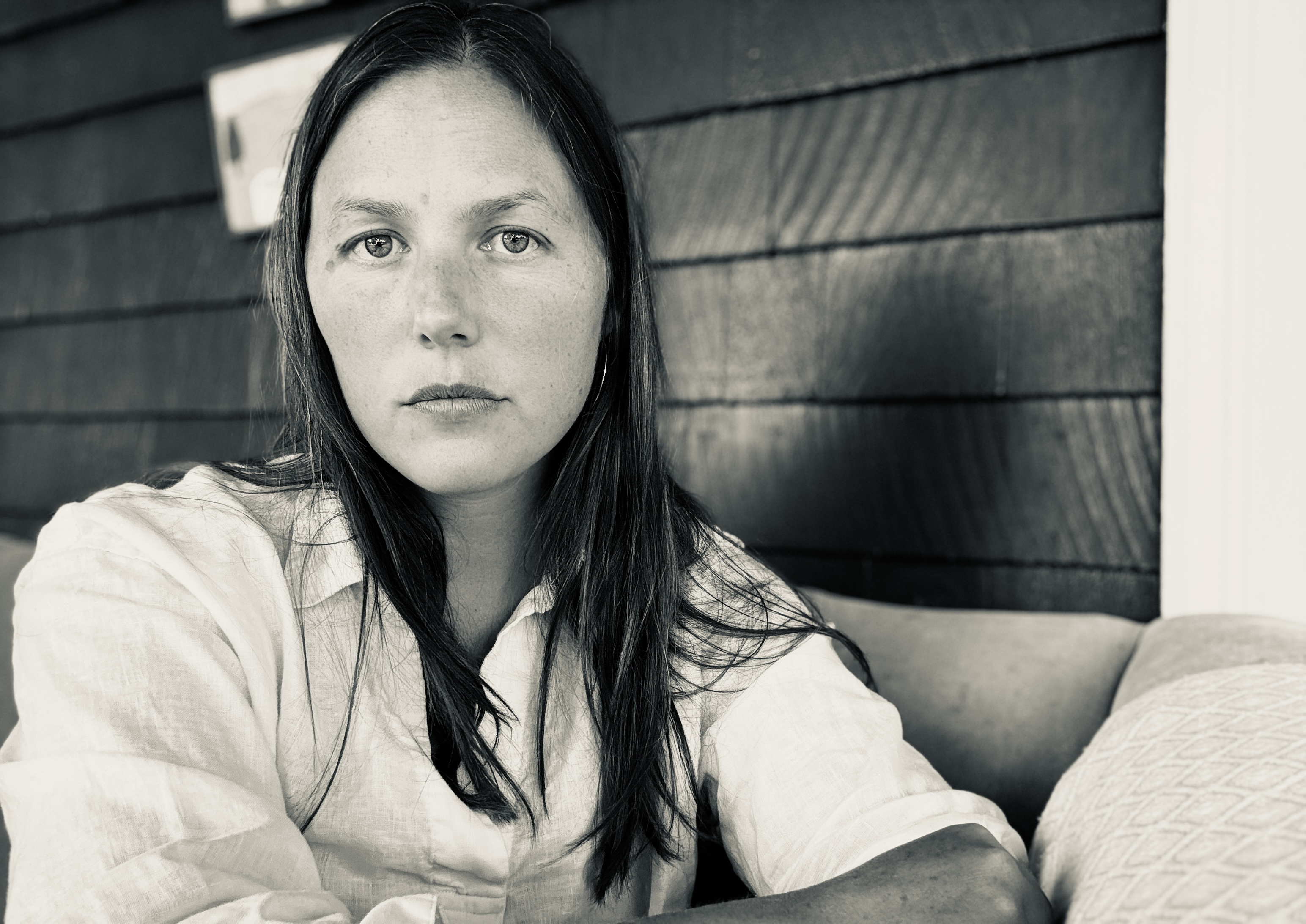

Micaela Brinsley is one of the co-editors-in-chief of La Piccioletta Barca and editor of interviews, as well as fiction and essays.


