BROWSE Columns


✕
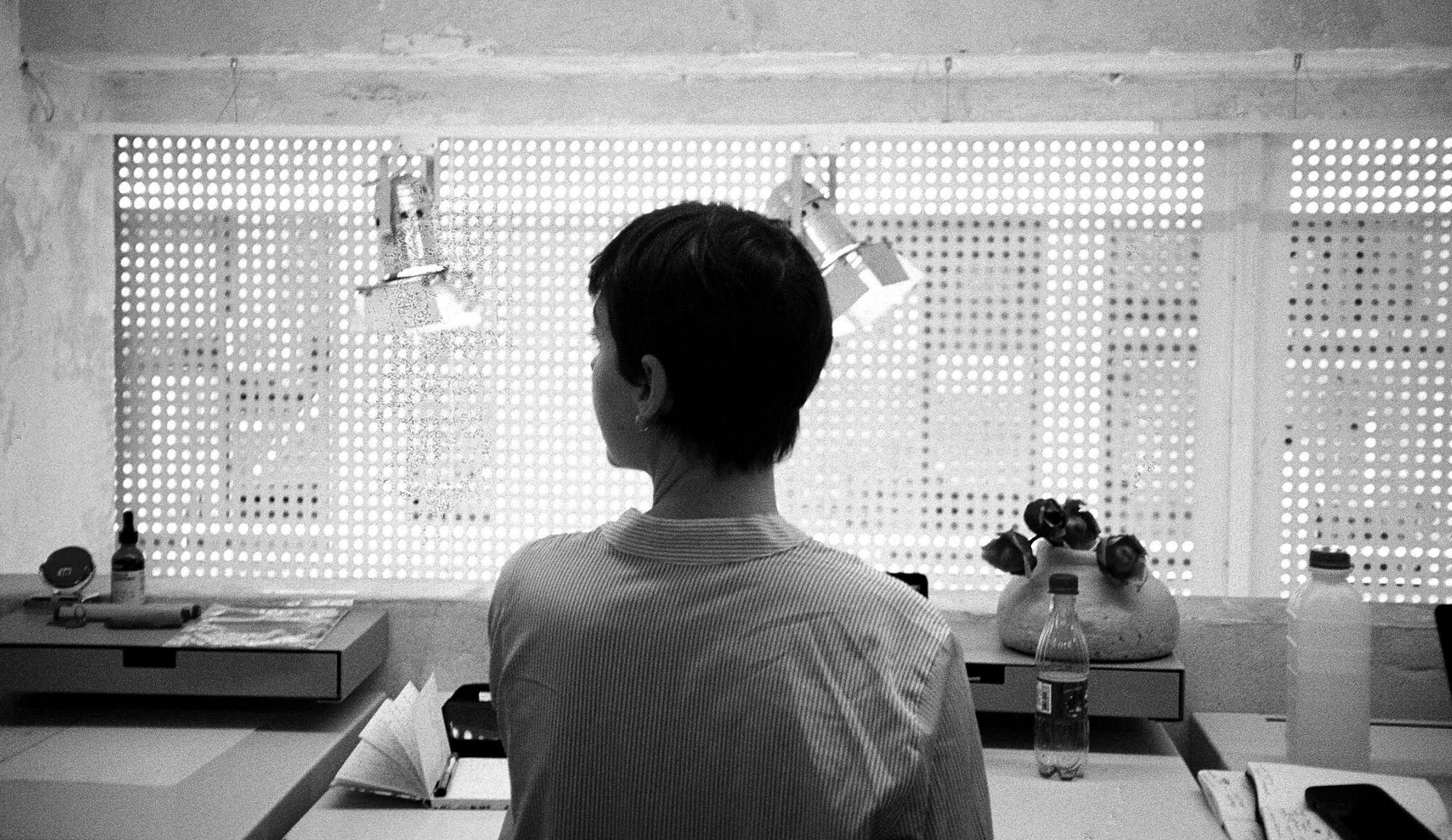


Micaela Brinsley: This all started because I saw that you asked people online if they thought making art was a form of sharing, a reciprocal exchange, or one more focused on an individual's inner life and passion for an artistic process. We then chatted about how both of us feel that all art is reciprocal, that it's about sharing, about listening. Could you say more about how you interpret its functions and the ways in which you've thought about that as you make art in your own life?
Yessica Klein: It started as a bit of an early morning existential crisis. I was resenting my day job because I've barely had time to write my own work, and then came the thought: why am I doing this anyway? Who cares about poems? About novels? About making art? But then, the thought of giving that up was heartbreaking — and I wanted to know if people saw *their* artistic practices as some sort of 'act of service.' I wasn't thinking of the linguistic roots of that, which was a good wake up call. I also had totally forgotten that people see art like a religious practice, maybe because I also do it as part of my day job, I felt like I had become a bit jaded?
I love the idea of making art as an act of devotion, but I'm not really interested in things that exist in isolation (which is sort of funny because I guess I like solitude more than most people). I see art (used as an umbrella term here) as a form of processing, of balancing the external and the internal. In that sense, I would still be making art if I were the last human being inside a cave, because that's what I need to do to make sense of the world. I don't think an audience is necessary, because art can be either action or reaction. I think it's more about starting a dialogue than seeking approval, if that makes sense.
I came to that idea of 'acts of service' thinking about the artworks that were transformative to me in one way or another, that helped me understand or even name feelings, situations. When people send a poem for my birthday! That brain sex thing when you start dating someone who loves the same movies! Elitism, capitalism and cultural capital are huge issues (and barriers) within the art world, but artworks can also be a form of connecting: with others, with oneself, with the world.
Is there a moment in which you remember experiencing the possibility of emotional transference in art (either as a maker or a viewer) that awakened your desire to make it?
There were quite a few! I remember seeing Felix Gonzales-Torres' 'Perfect Lovers', I think it was at Tate Liverpool, and getting a click, some sort of mental exclamation mark. At the time I was going through a shit relationship, and looking at the clocks, synchronised when the artist first set them up but now running on their own tempo, was such a comforting explanation of what I was feeling but couldn't yet articulate.
That power of universal communication — or translation or articulation — is one of the angles that motivate me to create. Maybe because I think art is constantly teaching me new ways of seeing things, of recognising feelings.
I think another part of that emotional transference was realising that I could write poetry or experiment with poetic language and call it art, whatever that meant. Growing up, being a full-time writer was NOT a thing; it was something like winning the lottery. I didn't even KNOW people could be artists, still — my grandmother was organising the local arts and crafts fair, she painted, did ceramics, introduced us to Monet and Renoir, I knew of the Brazilian painters in 1922, but I thought that was it. Until I got to London, it really hadn't hit me that people could be artists full-time, like in this day and age, or even study it in University.
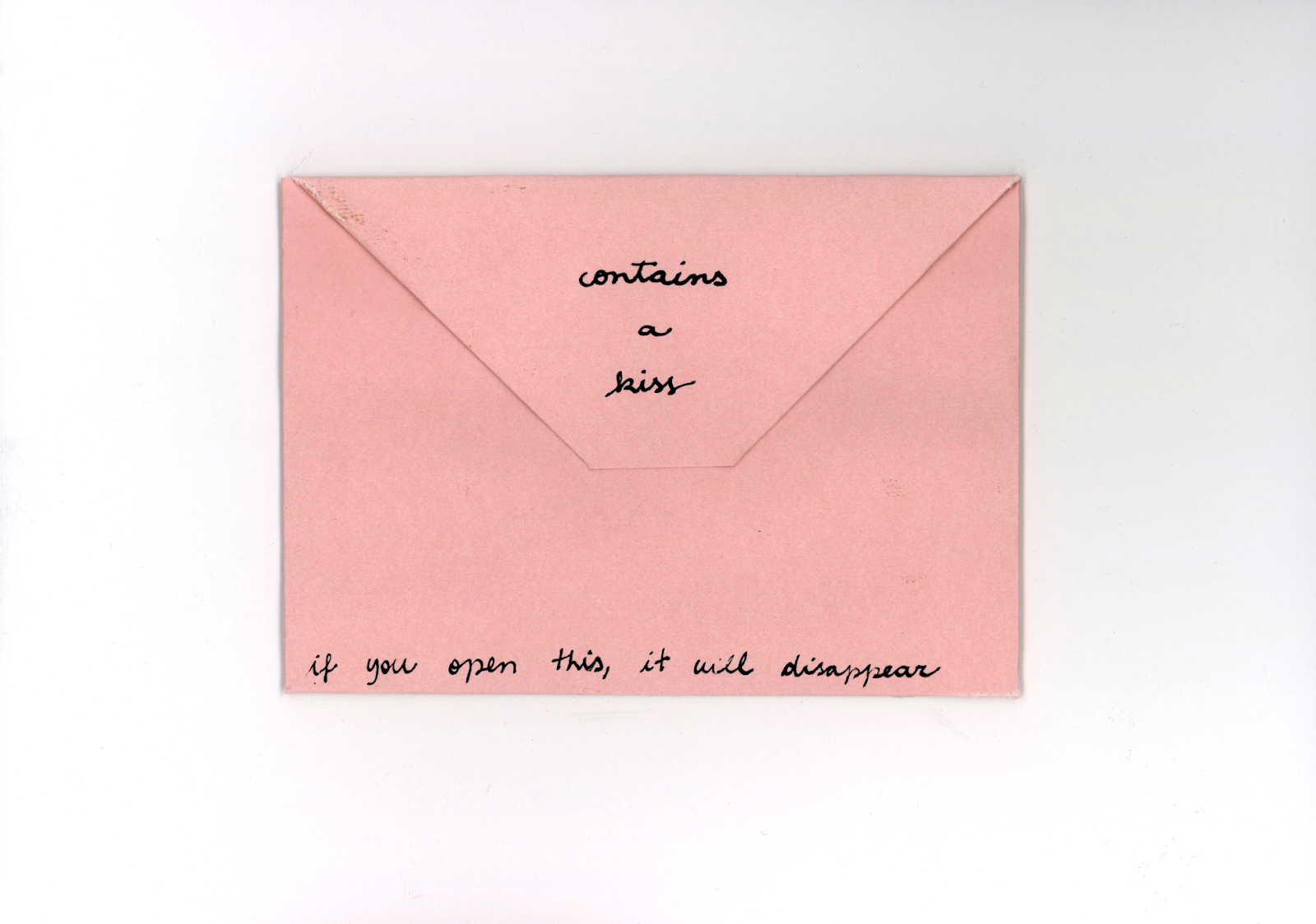
After I saw Gonzalez-Torres' artwork, I started experimenting more with ways in which poetic language can support that in-between state action/innaction or holding/not holding. I think poetic language can be tantalising in nature, to exist in that 'almost' state and sort of deny or undo itself.
As someone who runs a newsletter based on asking artists and writers questions about their own creative habits (check out That Poetry Thing), I imagine you've received many answers about routine, about inspiration, about creativity that shifted how you think about reciprocity in art. Would you mind sharing an anecdote or two about something someone said that changed your own perspective?
Generally, the work with the newsletter always reminds me that writing is work and not a ghostly Greek spirit whispering over your shoulder. You sit down and do the work. It also really helps dilute that idea of the writer as the tortured, drunken type working until 4am, which I can't wait to see completely disappear (but then again, I interview mostly women).
Katarina Gotic Damiani answered the 'dream writing location' question with 'The one that pays me to write?' — which I guess reinforces the perspective that writing (and art making) should be more valued in material terms as well. It shifts my idea of writing as an act of spark, or personal motivation, or some sacrificial devotion — also because most of the writing I get paid to do is not the writing I want forever attached to my name.
Before I started the newsletter, I used to be a firm believer in rituals, in having a dedicated space to 'perform'. Heather Christle was writing inside a closet. Amy Key writes in bed. I put a lot of hurdles between me and allowing myself to become a writer, and a desk was one of these hurdles.
I really relate to your statement that you aren't necessarily emotionally invested in the writing you're paid to do, and that you feel strange about it being attached to your name, as opposed to the art you make from your own creative impulses. But you also wrote about the importance of writers being compensated for their work and the prevalence of that topic in discussions with your writing collective, as well as in That Poetry Thing. There seems to be a tension there - that material value is so often attributed to work that doesn't necessarily speak to you or your creative comrades. Even if at this moment in time, your focus may be more on your professional writing in terms of time you dedicate to it, what are some of your strategies to ensure that you're keeping your ‘creative channel’ open, so to speak? You mentioned you used to be attached to rituals, but less so now... Additionally, how do you disentangle the validation of money from tainting (or does it still?) the spiritual or emotional impulses that inspire you to make your work?
These are such poignant and interesting questions. I feel like I fail myself when I push the professional writing to the point where the creative channel is completely shut, which sort of has been the case for the few months (the feast and famine cycles of the freelance life — feast in professional writing can mean [not always!] that the creative channel is starving).
It does create a disconnect with the self, at least for me. It's not the sort of inspiring existence I aim to foster in my life — I would live in a perpetual daydream and awe state if I were to have it my way (that means, waking up without having to ever worry about money again). When things are more balanced — it does happen! — I like to go to the cinema, go for a hike, maybe visit an exhibition. Just filling the creative cup somehow. Reading poetry is usually soothing too, but it can create a bit of bitterness if I haven't been writing my own stuff.
Regarding the validation of money — it's also interesting. Tangent incoming: I struggle a lot with performance anxiety and freak out big time before a reading. Then, this year, I had my first paid reading — and I was more or less fine? It's probably the most capitalistic (?) I've ever felt: if someone is giving me money to do this, then I must be good at it, so I don't have to freak out so much. Being paid for creative work is such a big validation hit and also so contradictory: I have to sell professional writing to make a living and thus I resent that work (to some extent—I'm also grateful for being able to write for a living), but give me money for my creative work and somehow it's fine.
The difference is that I wouldn't write startup articles if I weren't getting paid, but I'll certainly keep writing poetry regardless of being published or paid for it. The goals are different, and the fulfilment too.
I wish I understood my own dynamics between money, validation, and work (creative or otherwise) a bit better.
You mentioned that art is a form of communication, translation, and/or articulation, all at once - that also enables you to be surprised into new ways of being, of seeing. Yet, you also noted that you're not necessarily a fan of the old trope of a writer being up until super late and frantically writing (often drunk also, and a man). How would you characterize the ideal conditions - not in a material sense, but emotional - that bring about a moment or time in which you feel free to create the kind of work that you like to make? In other words, where does art come from, for you?
I love that. If I can paraphrase a (often drunk) man, it would be Theodore Roethke: ‘the spiritual dignity of a child.’ That's the moment for me — when all the emotional dust sort of settles and you can play and get lost in your imagination. Sometimes it happens naturally, that type of spring freshness of thought, ‘back to school’ new pencil excitement.
Maybe art comes from an unspoken promise?
A sort of settling, even if I can't define what, exactly?
It circles back to that (almost) middle-aged detachment from rituals, though. I used to think I needed to wait for that specific moment to create, but the more I write, it seems that the moment comes *after* you start.
Maybe it's the poet in me, but I think art is a bit magical.
I adored the small text/image poem you sent over, that you mentioned was somewhat inspired by Gonzales-Torres' artwork. Do you have any more of them you'd be open to sending over? I love the idea of almostness that it proposes, of suspension. What about that place of waiting, that's hinged on the awareness that movement may soon follow, that you find particularly exciting to express in an artistic context?
What I find exciting is the Escher trick they play with language, the movement and the stillness, being at both places at once. I think Gonzales-Torres does that, he's in the present and in the future at the same time.
It's half absurd and almost illogical, but it can hold you there, in the in-between space.
Let me see what else I have here!
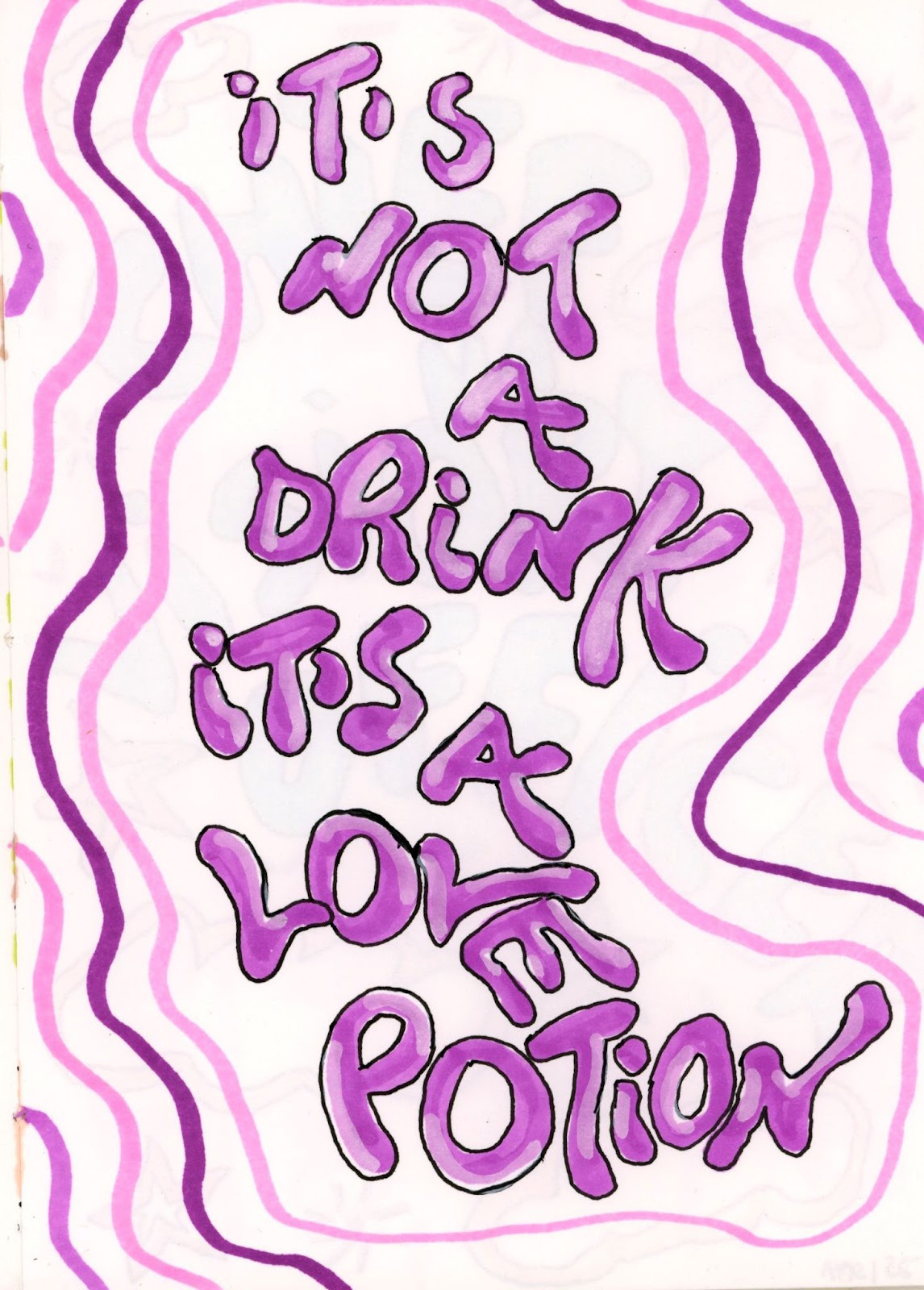
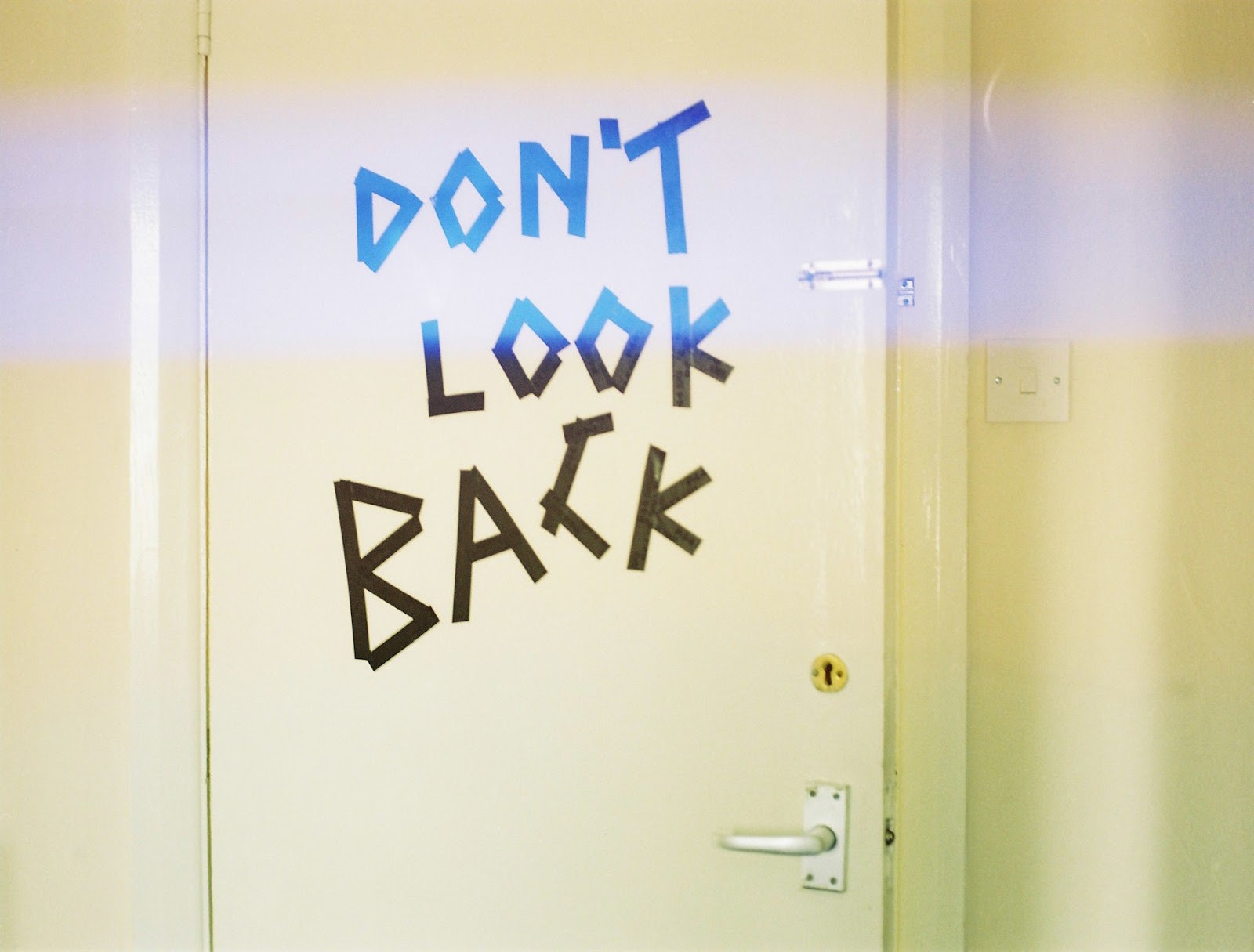
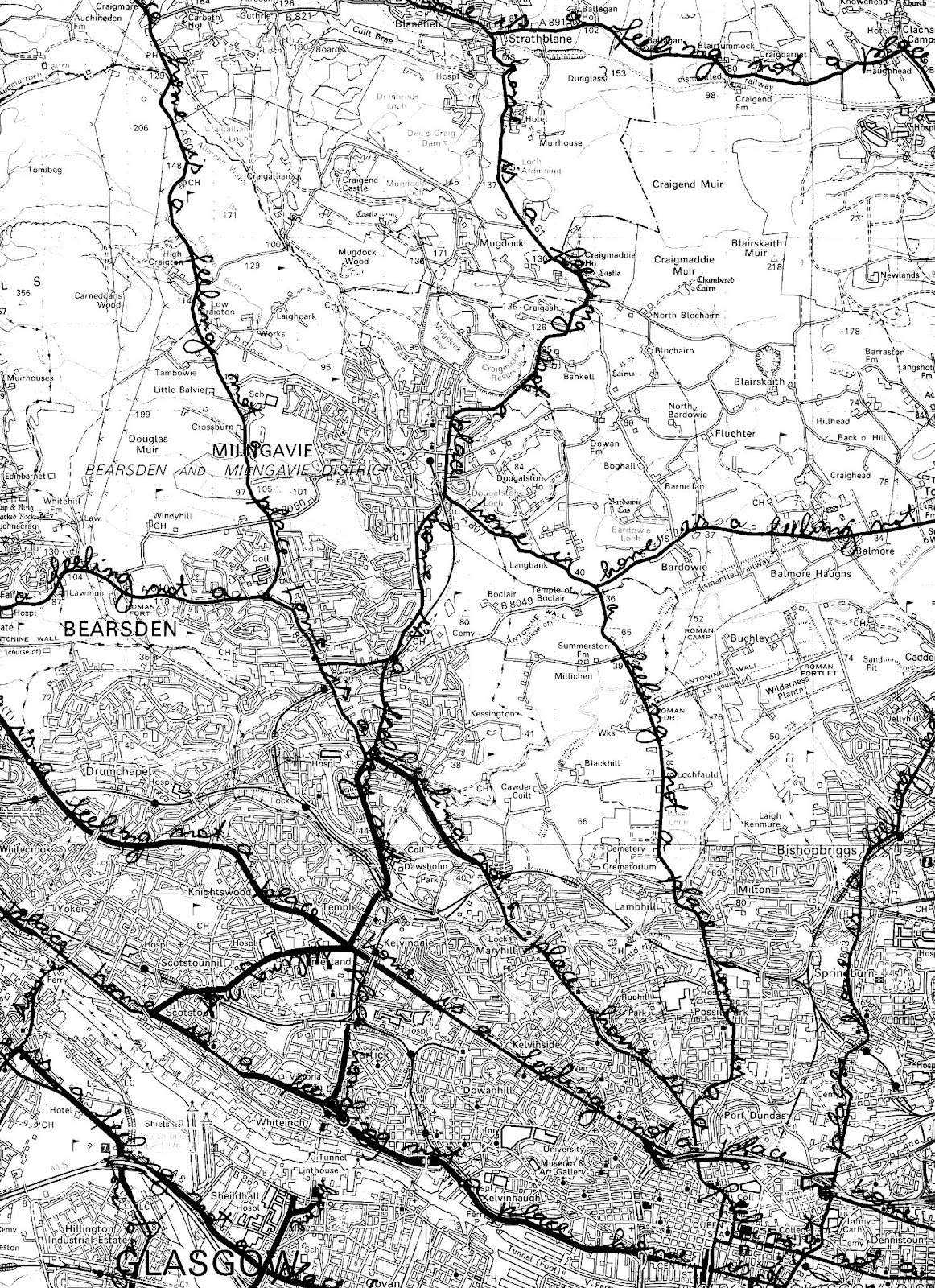
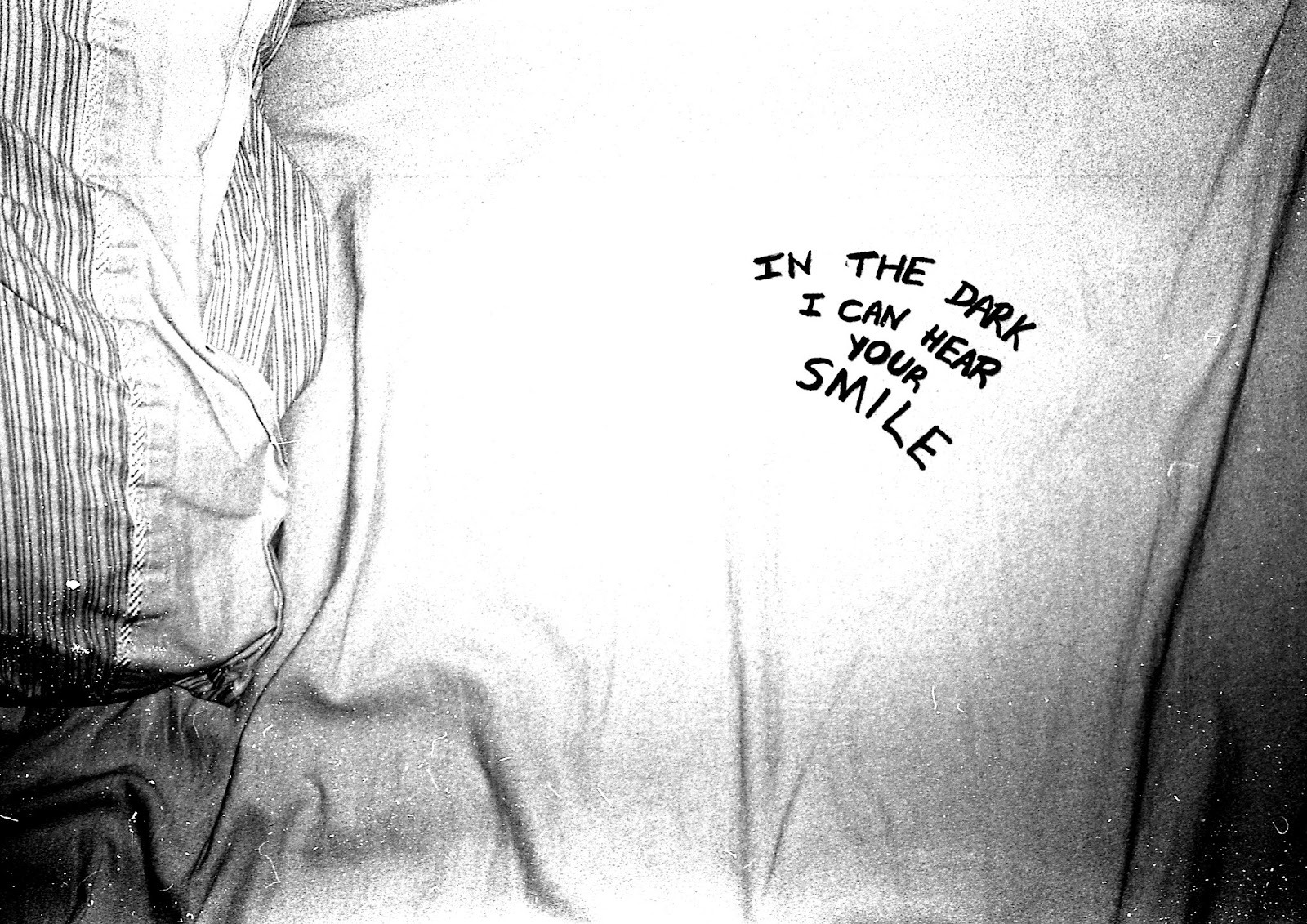
For a long time, I’ve felt that true validation in art comes from someone recognizing the soul of it, rather than validating its existence. Would you agree and to you, what would you consider the difference between validation and recognition in poetry, both on an individual level as well as a more communal one?
I totally agree! When someone recognises the soul of it, that moment when you feel seen, understood—that's an important moment for me as well. Mostly because it makes me feel like I'm not crazy and I'm not alone.
For me, validation is more personal than recognition in poetry—on an individual level, I think recognition is perhaps more objective?
Poetry is not exactly objective in nature, but I believe some skill, some craft can be recognised without necessarily being validated.
Maybe the English poet Wendy Cope could be a good example here—at some point in the late 80s, other contemporary poets would mock her (not *recognise* her work as a poet), but I'd assume she certainly got some validation since people loved reading her work and she sold so many books.
Thanks for sharing your thoughts on recognition and validation in poetry, its potential relationship with notions of objectivity and craft. To continue that thought, what would you say makes a poem ‘beautiful’ or ‘work’? Or is there some other adjective that you feel is a really important one for you, when you think about how to identify poetry that speaks to you? As I'm a prose person more than one that leans towards poetry, am really interested in your thoughts here, and what about a poem activates something inside of you that goes, ‘yes, this was it, this did something for me internally’?
For me, I think what can make a poem beautiful or work is a mix of an element of surprise, while also bringing some familiarity to a certain feeling. I think 'Lying in a Hammock at William Duffy’s Farm in Pine Island, Minnesota' by James Wright, has that—that ending!
'I have wasted my life'—there's also a mystery to it, and maybe when I say 'beautiful' I mean some sort of metaphorical aesthetic epiphany? Some feeling of an answer without knowing the question?
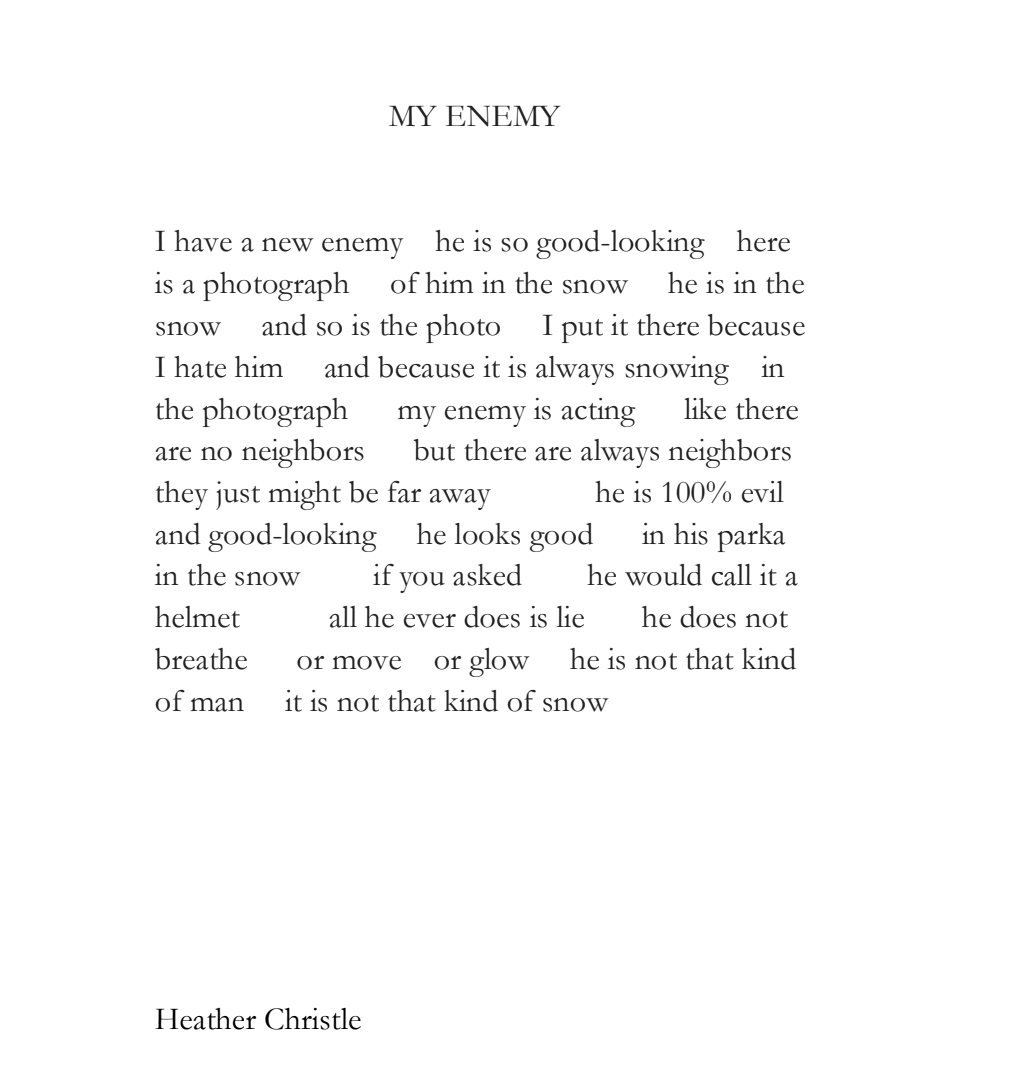
When it comes to poetry, personally; I like work that complicates and simplifies at the same time. 'My Enemy' by Heather Christle also has that mystery to it—what kind of man? What kind of snow? And her craft as a poet here is so brilliant as well, the use of all those 'forbidden' words in poetry, 'glow', 'move', 'good' etc, monosyllabic words that usually, as a poet, you would try to replace with something more elaborate or 'poetic' somehow.
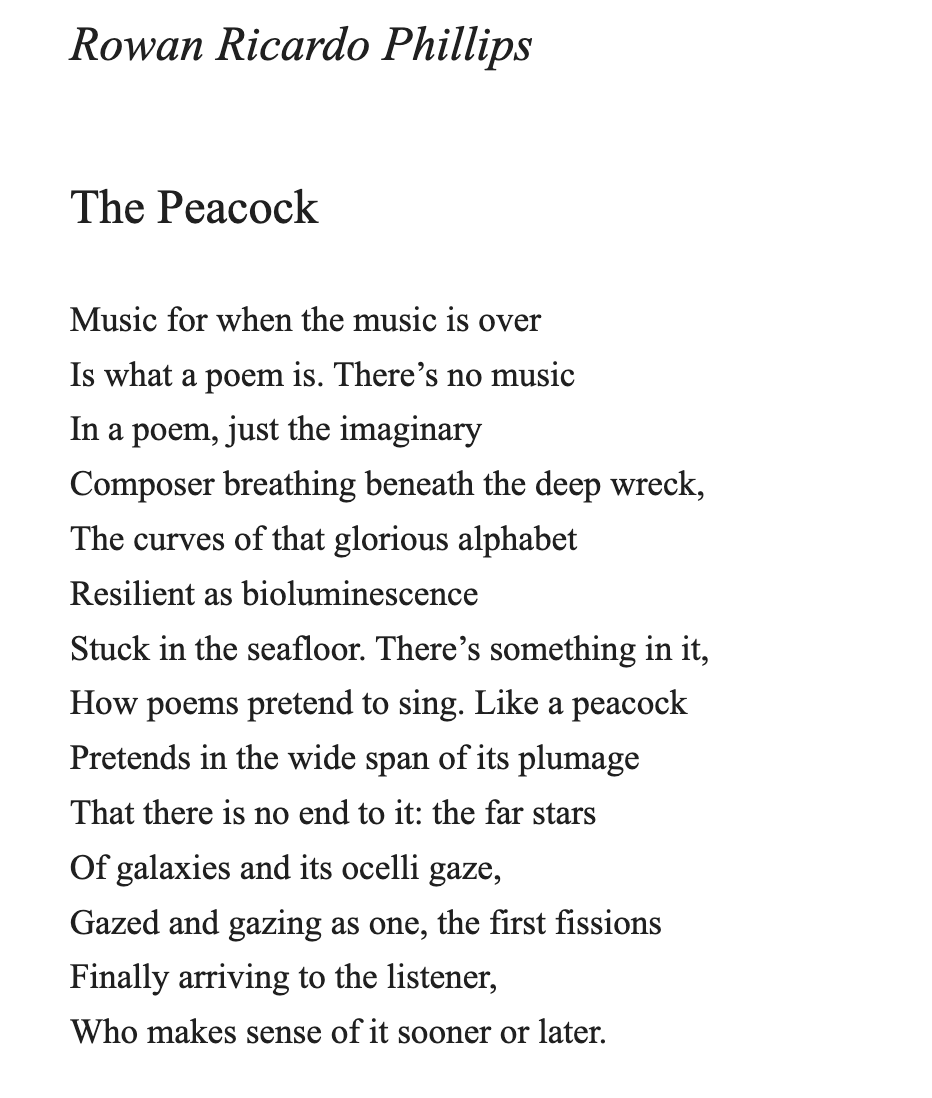
I like poems that are kind of slippery or elusive in their meaning. Rowan Ricardo Phillips explains that in 'The Peacock': 'music for when the music is over/is what a poem is.'
We're not straightforward people.
Would you mind potentially sharing such an experience where after you sat down to write, maybe it took a while for you to feel inspired by then you felt completely enraptured by that experience?
That happened a lot when I was writing my novel in 2023, actually—it was such a different process, to sit down without really having an idea of where to go, and just open a door to some plot solution by showing up regardless. I'd feel really stuck, reread the paragraphs from the day before, and then just push myself for an hour or at least 500 words — and then it clicks, there's suddenly a drawing of a door where before it was a bricked dead end.
That also happened during this summer—I went to the Scottish Highlands with a couple of friends, and we had a few hours each morning to *produce* as many things as possible, regardless of the *quality*. I think I wrote 15 poems that week, and not everything was salvageable, but to watch something being born by committing to it can be just as inspiring as thinking of a line during a walk and nurturing that line for weeks on end.
To me, I think that relates to the momentary boredom of the white page or the plot dead end: if you stare at it for long enough, *something* will come out of it. That was definitely a learned process though, for years I felt too lazy or not motivated enough to write or create like that.
A few poems attached from that week!
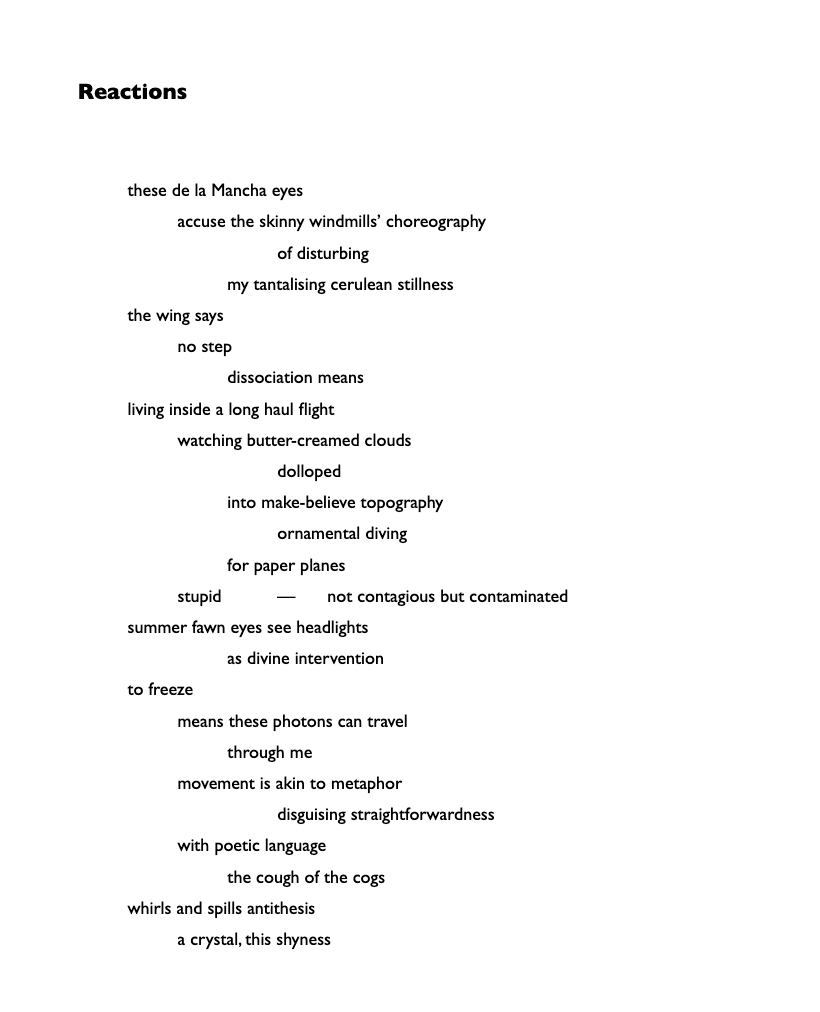
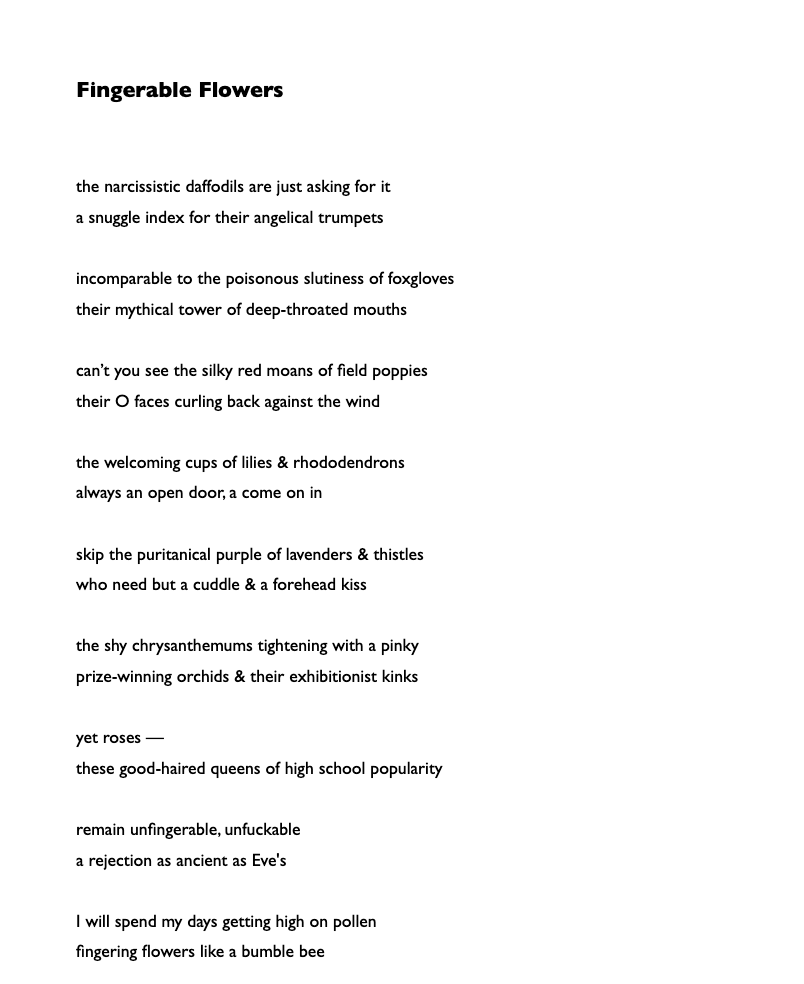
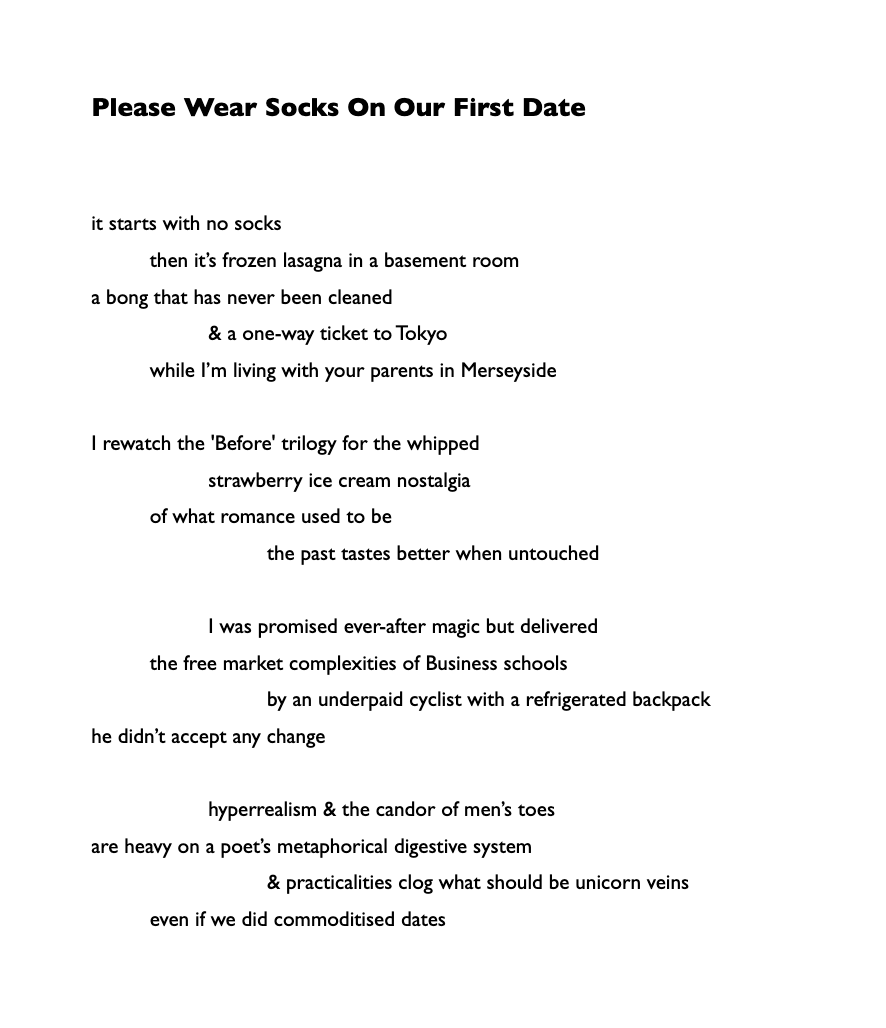
I adore that you brought up the importance of boredom in creativity. I don't remember who it was, but I heard somewhere that the reason why it's so important for Christian kids to go to church is not necessarily for internalizing the Christian doctrine, but actually to be in a space of boredom, ha. While I'm not Christian so I can't attest to the degree to which a Sunday service might be boring, I really liked the idea of having curated time for it! What do you find yourself drawn to exploring, investigating, or creating, when you find yourself in a space without too much stimulation?
I love that quote about Christian kids being bored during service—I'm sure that's exactly how it works! Going to museums, walking, and reading are definitely my top boredom escapes (although I do enjoy these activities when I'm not bored as well).
When I'm in a space without much stimulation, I'm looking for sparks or little bubbles—something that kickstarts that chain reaction. I'm a big daydreamer, and I think accepting boredom creates space for that mind-wandering and daydreaming—it adds possibility to the creative thoughts.
I get overstimulated quite easily and I don't like that mind-numbing feeling of endless scrolling or binge-watching or listening to music at all times. That's one of the things that kills creativity for me, to always be actively feeding my brain with something. I think museums, walks, and reading are a bit more engaging in terms of brain work while allowing for that boredom space/daydreaming void to work.
Now that you’re in recovery mode from a period of work intensity, what have you turned to in particular (exhibits, novels, music, walks, etc) that have nourished you? Any recommendations?
So many things!
Time alone is probably my number one recommendation—time alone with the computer off and letting that boredom brew a little bit.
(It's one of the things I sort of miss the most from the pre-Internet times: boredom. We grew up without a TV as well, so during a lot of summer breaks, my sister and I would just make up the weirdest games to stay active).
I've been looking back at my list of films and I watched 'The Worst Person in The World' and 'La Haine', which were brilliant, and I took myself to MASP (Sao Paulo's Art Museum) to see an exhibition about ecology and climate action. I love that Lina Bo Bardi building as well, it's such a brutalist landmark in the city.
And daily walks—whether at my parents' house in the countryside or up and down Avenida Paulista. I'm reading Mário de Andrade's Macunaíma (circling back to Brazilian Modernism) and, for this week at least, I'm not worried about being productive at all.
I'm writing for one hour each day, lazily, and that passivity feels good. I can feel the ideas stirring again, and I am grateful I get to create. It's such a privilege — the work and the rest.
Going back a little bit to your anecdote about writing a few hours everyday in the Scottish Highlands when you went with friends (what a dream!) and coming back with lots of work but finding only some of it ‘salvageable’ - how do you determine whether some material is useful for repurposing into a piece of writing?
I tend to keep all of the sentences and little bits of poem limbs, even the old poems or stories that make me cringe when I reread them. I like waiting to see how the random pieces get together, like in a bigger collage.
(I like the Futurism poets and a bit of surrealism too. Mina Loy comes to mind.)
I work with fragments as well as poem-by-poem. I sometimes feel like if I try to narrow my focus too much, I end up saying the same thing in different poems.
The poems are 'salvageable' when there's a feeling of direction, somehow, or a 'shape'. Sometimes they feel like random phrases barely sticking together, so they go back to the waiting room (or some sort of 'maturation' room).
We've discussed a lot so far, the importance of space in order to create the right conditions for the creative impulse to flourish. Do you also think that the notion of a destination, the idea of some idea of a future completed work is also necessary in order to continue a creative process beyond a moment of inspiration (which, as we said, isn't about a beginning as much as a flow)?
I rarely think about the destination, to be honest! I tend to start projects and ideas and then move back and forth between them—to me, it feels like they are never finished. Note that I immediately associate ‘destination’ with some sort of ending or accomplishment somehow.
I like processes and I enjoy seeing where they take me, but maybe that's also part of a poetry practice? To me, the pieces we create are snapshots of who we were at a certain time and place, and I could edit endlessly. I thought I'd feel the reward of a future completed work when I finished the first draft of my novel, but I got nothing.
Maybe I'd feel differently if it ever gets published?
Would you mind sharing some of your preoccupations, particular interests, idiosyncrasies in terms of the work itself that you create?
One of the starting points is definitely poetic language and its uses in different media, and that ~feeling of poetry, its intangibility and mutable nature.
I'm obsessed with states of awe and wonder—what ARE they? Where do they come from? When, in an evolutionary context, was it important for humans to stop and smell the roses? That drives me crazy, and to think that art can create a sort of universal sense of wonder is one of the main quests.
I'm interested in quantum physics, mechanical x digital technology, manual crafts through the ages, witchcraft, nature, and the feminine in general. Repetition, patterns, mathematics as a language, languages, philosophy... I'm not academically-inclined (I wish I was), and I struggle to narrow down topics and interests.
I love to read and listen to artists who are well-versed and articulate about their own practice; I'm not like that at all.
I think it stems from curiosity, from trying to find beauty everywhere—chasing that poetry feeling or some sort of epiphany.
Both of us are people who are from places where we don't necessarily live full-time. Do you think that it's particularly important for you to live in a state of movement in order to create enough privacy for you to feel creative? Or is the creation of privacy/creative space not necessarily contingent on whether or not you feel at home in the place where you happen to be?
Yes! I was thinking about movement while replying to the question above. Physical movement, but also that sort of monkey-brain curiosity, of jumping between ideas and interests and focus.
There were moments in my life when movement meant being uprooted, or was the result of restless movement, and I didn't feel like that was constructive or helpful in terms of mental health, but they were also very fruitful years in terms of artistic 'production.'
I was really craving a still point, and now that I have that—I've been in the same flat for the past 5 years, the longest I've lived in a place since 2010—I constantly wrestle with that itch of otherness, I crave a certain discomfort, you know?
I wonder if it's the same for you—if the unfamiliar starts feeling closer to home than what is, actually, familiar.
I believe that, over the years, being grounded has meant more than just feeling at home, or even having a home, and is also associated with better mental health (to me), which ultimately nurtures the best creative space.
When my 'home' situations were unstable, that mental creative space—or grounding myself in creating—was crucial to stay balanced or somewhat sane, really.
Now that we've spent the last few months going back and forth about how to access a creative flow (one that debunks the narrative of divine inspiration striking a sole artistic genius as the only method by which art can be created), how do you feel as if you're moving into 2026 as an artist and poet? Has our conversation changed in any way how you've conceived of your craft or, potentially, has it reaffirmed the passion you've always had for poetry?
Our conversation over the past few months has significantly shaped my perspective on how to approach 2026 as an artist and poet. It has reaffirmed my passion as something worthy of pursuit and commitment, which is so easy to let go of when one also needs to prioritise financial stability to maintain a healthy wellbeing (mentally and otherwise). Moving into 2026, I definitely want to protect the space to create, and I think this means taking on less paid work to focus more on my creative outlets, as well as sharing my creative work more often.
I replaced a significant portion of my creative work with paid work in 2025, and it ultimately left me feeling drained. Not showing up for my own writing was a type of self-betrayal of sorts. Your questions helped me acknowledge that I wasn't showing up for myself—that, while I had debunked many of my own beliefs about creativity and productivity over the years, I failed to truly protect the part of me that needs to create in order to make sense of the world.
Now that I'm back to reading and writing, it makes me wonder: how could I let this go for as long as I did? Why did I put poetry on the back burner? But instead of rummaging on that, I can let go and enjoy an intense wave of relief: it's still here, I can still write poems—and it feels really warm to have these moments of awe and scribble little verses or story ideas while I go about my days with a bit more space (and a bit more boredom).
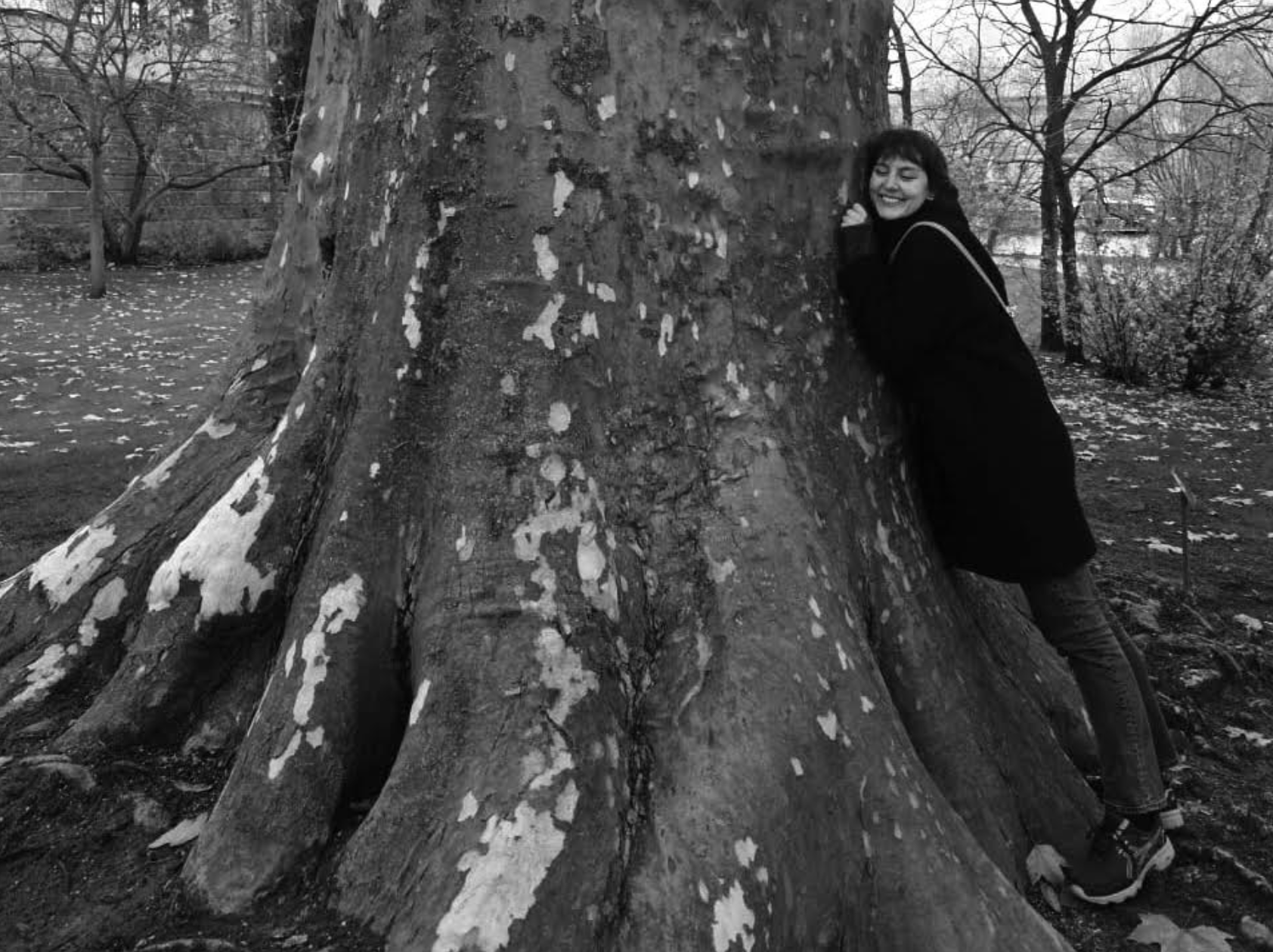
Yessica Klein is a Brazilian writer and artist based in Berlin, Germany. She holds an MA from Kingston University in London (UK). Her writing and artwork has been featured in publications like Banshee Lit (Ireland), The Moth (Ireland), The White Review (UK), and more. She was shortlisted for the 2023 White Review Poetry Prize, the 2022 Aesthetica Creative Writing Prize, and the 2017 Jane Martin Poetry Prize. She also runs a newsletter called That Poetry Thing, focusing on writers’ desks and their creative habits.
Featured photograph by Yasmin Klein

Micaela Brinsley is one of the co-editors-in-chief of La Piccioletta Barca and editor of interviews, as well as fiction and essays.


