BROWSE Columns


✕


The man opened his letterbox in a leisurely way. As usual, he was picking up his post only once a week. Urgency formed no part of his priorities. Therefore post day was on Mondays. He followed the same process for his emails.
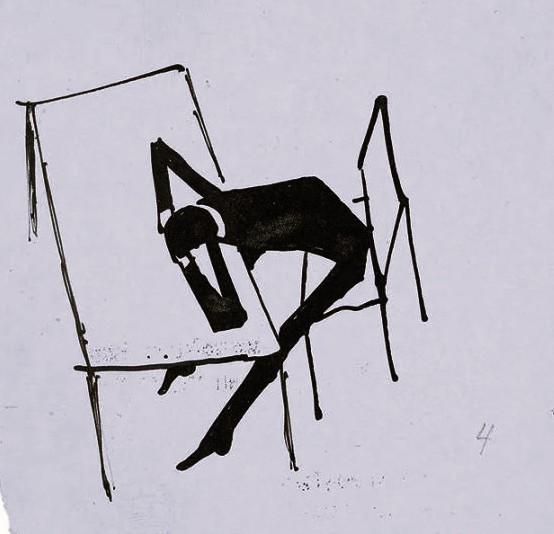
Seated at his metal desk, he started sorting his post into two piles. Official letters and bills on one side and responses from publishing houses on the other.
He was not one of those prolific writers. He was taking his time to complete his masterpiece. It had taken twenty years to finish this manuscript of short stories. He hated poetry as he found it too abstruse for his tastes and he hated the novel form as it was too long. In between these two he had chosen the short story, a more complex form than it seemed and above all more direct and incisive. To say in a couple of pages what a novel would drag out over two hundred pages.
Thus he was waiting impatiently for this letter from his Sud editor. He held his breath before opening the letter and plunging into reading it:
“Dear Kitemona,
We have read your manuscript, which unfortunately did not catch our attention. I did not find your collection of short stories appealing. Overall it is too uneven. It is beautifully written and pleasant to read but the stories were not very captivating for me. I was not interested or could not identify with the characters. The style lacks inspiration, pace, and flavour. And, above all, a tone that is your own. The reader gets tired and bored of it pretty quickly and drops it. Your collection did not charm me or move me, and we do not get sufficient pleasure reading your work. However, other readers may be more responsive to your prose and to your stories.
We propose to return it to you by post on receipt of ten Euro by international postal order. You may also pick it up from our offices Monday to Friday between 10.30 am and 7.30 pm.
In any case it is imperative that you confirm your details and especially the following number: 1395
Please note that we will not be able to keep your manuscript any longer than one month from receipt of this letter. With our regrets, and with best wishes, Yours sincerely,
The submissions department.”
The great writer put the letter back on his desk. He got himself a glass of palm wine. He had been careful about only copying short stories by his favourite male authors. The submissions department manager was a woman. He always looked down on women, especially those who were competing with men. He knew that these days men should be feminist but it was an impulse stronger than him, this world going into a downward spiral. It was all cock-eyed. Men should almost be excusing themselves for existing. A crazy world.
His manuscript was a pleasing jumble of styles, his own writing and plagiarised text from his favourite authors. He had taken care to select varied texts going from James Baldwin; René Depestre, Frankétienne to Ngondo Moyula and some other authors whose stories appeared only in small-print editions of fewer than 1000 copies in Anglophone and Francophone Africa, the United States, in England and in Ireland. For Kitemona, the great writer as he liked to think of himself, since the dawn of time there had been no new race of humans on Earth. So humanity had been re-enacting the same tragedy or comedy, depending on your point of view, for thousands of years. For him, the whole world was nothing but plagiarism so it was not necessary to invent when things were already said. All you needed to do was to rearrange things quite simply to bring them up to date for public taste. On the African continent the mark of the former colonists was so deep that the people even thought in the language of the former masters. Impossible to rediscover the founding myths. Young people of Africa were now looking only to the West. That was a whole other story.
He pulled from a drawer two other negative responses from prominent publishers. There was a slight satisfaction mingling with some irritation as the story that seemed to attract most comments from the editors was the short story “Aisha” written in the first person form, one of his own creations, and a story not a result of plagiarism. A young Afro-European man who was asking a young African-American woman to marry him.
He began to reread the comments of these two editors.
“Dear Kitemona,
Thank you for sending us your work. We appreciate the chance to read it, but, unfortunately, we will not be publishing your submission at this time. However, while we will not be publishing this manuscript, we admire the quality of your work and hope that you will submit again. We have included some comments from our editors about your work at the bottom of this email, and we hope that they are helpful to you. You can be assured that your work was read by dedicated editors who wish that they could publish all the sincere and well-crafted work that is submitted to them. Unfortunately, limitations of space and funds dictate rigorous selectivity; two issues fill up very quickly when we have so many quality submissions each year. Once again, however, we would enjoy reading your work in the future. We hope you will submit to us again, either generally, for one of our special theme issues, or for the Literary Awards or the Awards for New Writers. Manuscript Comments:
I really loved "Aisha"—its navigation of complex issues facing Black men and women in America and Europe, the differences and the similarities, and ultimately, the narrator's unwavering desire to stay the course and play the system to provide for himself and his would-be wife. The loudest voice in this piece, however, is the silent interlocutor—and while this entire epistolary piece is clearly a rigidly structured argument for marriage—his ostensible misogyny feels as though it is an organic part of his personality; it never feels too over-the-top. The brilliance of this piece, I think, is the narrator's misogyny layered on top of his discussion of racism. The reader is implicated, too: How do we feel about calling out a complex and layered European Black man on his misogyny? Do we "allow" ourselves to see this man's flattening of Aisha in his pointed and dogged argument for her hand? Or do we chalk it up to his being "old fashioned" instead? Do we forgive him his trespasses because of all he has suffered?
I also admired the way the argument was arranged: he addresses first his desire to work in America in order to break the code of "objective" racism in France; discusses the differences between police brutality in the US v Europe (American police are, it turns out, "more" brutal); he draws a picture of what Aisha's Home Life can be after they move to Europe and expose their progeny to other Black children in order to raise them to be fully actualized adults. My suggestions relate to shoring up the work's two strongest elements: its implicit gestures of sexism and its mostly bullet-proof structure. First issue is the length. At 20 pages, the monologue, which is in effect a defence for Aisha's hand in marriage, runs long for the genre. There are some segments that can be sharpened and economized, to greater, not lesser, effect. I believe with a little bit of paring back and refinement of the structure, the prose will also keep the reader focused on the silent interlocutor. Certain passages (as beautifully written as they are), risk drifting away from the main mode of the story: a marriage proposal to a woman who, by virtue of the epistolary form—and the speaker's sexism—is silenced. My second suggestion might be tougher to address. I would like to see just a little more self-awareness that the piece wades in sexist waters. I love that it's subtle—and although the narrator doesn't know he's misogynistic, the work does need to be a little more self-aware. This could be done a number of ways; the speaker could, for example, sharpen the knives just a little bit more toward the end. As written, he ends on a note of justice, which is fine. But the ending feels just a tad simplistic compared to everything that came before—only because the piece is so fine. And more importantly, the ending lacks thematic self-awareness, because the sexist patois all but disappear. I will say though the line that he can "love" but not "protect" Aisha is a nice touch—his attitude peeks through here as an artifact of both sexism and the current global climate of racism. So we get a little of it there—but I wonder if it's enough?
The bottom line however is this piece is beautifully wrought, intelligent, and worth a second look.
Sincerely yours,
Editor-in-Chief
“Dear Kitemona,
Thank you so much for sharing “Aisha” with me. Forgive my sparse line edits, but my editorial considerations cover a few broad ideas that might encourage you to make several substantive revisions, so the lines might very well change in that process.
This story makes great use of the epistolary form, an extended letter in which the narrator tries to convince Aisha—and often assumes he already has convinced here—to be her husband. He is a complex and conflicted character with many contradictions in politics, family beliefs, and impressions of himself. This is no easy feat. It’s extremely challenging to write characters that feel rounded and fully developed, that we can see the good and bad in, that we both want to root for and scream at, and I think you’ve done that well here.
I do worry that for some editors the narrator’s assumptions and beliefs—sexism, homophobia, etc.—might discourage their reading. One thing to think about as you revise is what message you want to present as an author and the disparities between that and what the narrator wants to say as a character. The trick is for the reader to see your critiques of the narrator without them coming off as didactic. There are some places in the draft that do this more successfully than others. I’ve made a few notes in my line edits.
In terms of structure, I think a few passages could be moved around and condensed. The narrator explains a lot to Aisha about society—both American and French—she likely already knows, so I think deleting or minimizing those sections could help speed up the pacing and give more space and focus to the narrator’s more inspired and individual thoughts. The more you can eliminate probably the better, so that the letter has a more conversational and convincing flow. I also think you could move up many of the narrator’s thoughts about his value as a potential husband to earlier in the draft.
It seems to me he would want to make his case early and make it as strong as possible without too much rambling. This process might also allow you to more directly cater the letter toward the strong close, so that after the poetry and Twitter exchange the narrator’s final refrain “I can love you, but I cannot protect you” really hits home. In other words, perhaps experiment with shuffling some of the sections around and getting rid of anything you think is too much of an aside or distraction.
These, of course, are just one editor’s ideas, and might be completely askew from your artistic intentions. If so, please feel free to ignore this notes wholesale, but I do hope they provide some value. Thanks again for giving me the opportunity to read your work and please let me know if you have any questions.
Best regards,
The editor”
Like every other genius, the great writer took criticism and suggestions badly. He thought of his work as accomplished. Also, every writer puts part of themselves into their writing. They sing from their guts.
In summary what these two editors were asking him to do was to renounce a part of himself in order to get published. It was therefore necessary that he produce a sanitised or even politically correct version of his work. After three divorces he understood that modern women no longer knew how to stay in their place or else it was he who had become a dinosaur. For the great writer, it was the task of the artist or the intellectual not to distort the truth in order that the world be presented as it really is. Production of written work must give rise to debate. It isn’t normal to create an artificial world of Care Bears where sexism, homophobia or racism would no longer exist. To make people believe that the injustices of society would disappear in fiction is an intellectual imposture and, above all, does not prepare individuals to face up to real life. Editors as temple guardians were giving instructions to writers, censorship blending well with self censorship. This approach prevents us all of us from learning and becoming better.
The great writer asked himself what the future was to hold for his next manuscript. Was he going to abide by this self-censorship? Let’s see. He liked Chinua Achebe’s writing but this author was too famous and the public and the well-read literati would very quickly recognise his style. The great writer thus contented himself by plagiarising less well-known writers and especially women. He never read any stories written by women. He had had work written by women in his hands some time ago but well, it hadn’t thrilled him. Was that a crime? The only women writers he’d read up to now were Nafissatou Dia Diouf, Nene Amélia, Tidjani Alou Antoinette, Tiddis Anne, Mariama Bâ, Audre Lorde and Suzanne Ushie .
The Me Too movement exasperated him but nowadays women were challenging oppression and were gaining ground. He went to his bookcase to select some female works.
He was going to pick a female pen name: Niélé ? Akofa ? Nyelete ? Adjoa ? Hiari ? Iruwa ? Jifunza ? Mandisa? Souadou ? Ndagou ? Nbulungi ?
He prepared a new manuscript and started dreaming of what he’d do with his first cheque from Présence Africaine as a great writer, of an embittered or misogynistic writer. Rideau.

Landa wo is an author from Angola, Cabinda and France. He writes fiction, nonfiction, poetry, and reviews, often in some hybrid form. You can find his words in Bellingham Review , Crannóg magazine, Colorado Review, Contemporary Verse 2, Columbia Journal, Cyphers, Fiction International, Grain Magazine, Black Warrior Review online, Michigan Quarterly Review, Nashville Review, Missouri Review, Raleigh Review, Rattle, Salt Hill, Scrivener Creative Review, The Common and other journals and anthologies. Landa wo is politically engaged and his work deal with prominent issues of social justice, discrimination and cultural strife.


