The music was loud, and all she could discern were those two words, chopped, splintered, small. Foolishly she tried to ask, what did you say, to confirm what she’d heard, but there was no time. They floated on in the air, she and the question, what did you say, like a torn kite with no string and no destination.
They had gone to the masked ball together: he, a beautiful mystery, was batman; she was a unique creation—no one could identify the character. That was the intention: to confound. She was wearing a puffy skirt and a red mask, and the purple lipstick added a dramatic touch to the aesthetic. She left home thinking she looked so perfect, a flower, but she must have had an inkling then, for only the mirror encouraged her, go, go and be beautiful at the party!
Batman didn’t look. If he looked, he didn’t see.
He wore the bat-attire with his whole body. He grew wings and flew toward the moonless night as soon as they walked into the ballroom.
He said,
“Ever again.”
He might have planted a kiss on her face before leaving her there, spinning in the ballroom for all to see. If she felt it, she made it up. There was no kiss. He could have at least lingered at the party a bit longer, but the urge to fly was greater. They had barely arrived when he left. Not before saying,
“Ever again.”
Batman’s hand let go of the woman’s in an abrupt gesture, the kind of pull you give a windup toy to make it spin-flip-out.
She spun-flipped-out.
Inside the ballroom, the bat’s departure didn’t alter the substance of the night at all, except for her, who, perhaps a ballerina, was now missing a partner. She drew empty circles in the ballroom. In their center, there was no trace of batman, only the silhouette of the puffy skirt. A racing clock, the woman moved on legs that seemed like second hands in a dizzy, crazed spin.
Did she hope she would still find on the floor the words that had preceded “ever again?” She didn’t find them. Not even a forgotten verb, shattered, in a corner of the room. All she could hear was the litany.
“Ever again. Ever again.”
How long would that maddening bell keep ringing?
Waiters paraded trays of champagne and wine glasses. She wouldn’t say a word, not yes, not no, because she couldn’t tell if they were offering her the drink. She was dizzy already without any alcohol.
The music went on. There were no switches to turn off the spinning or the night. She spun for so long that no one was still wondering if she was a ballerina, she was now a corkscrew, trying to bore into the ballroom floor a hole in which to hide-sink. She kept moving, corkscrew-spinning across the floor. Who heard the sound of the corkscrew-woman spinning?
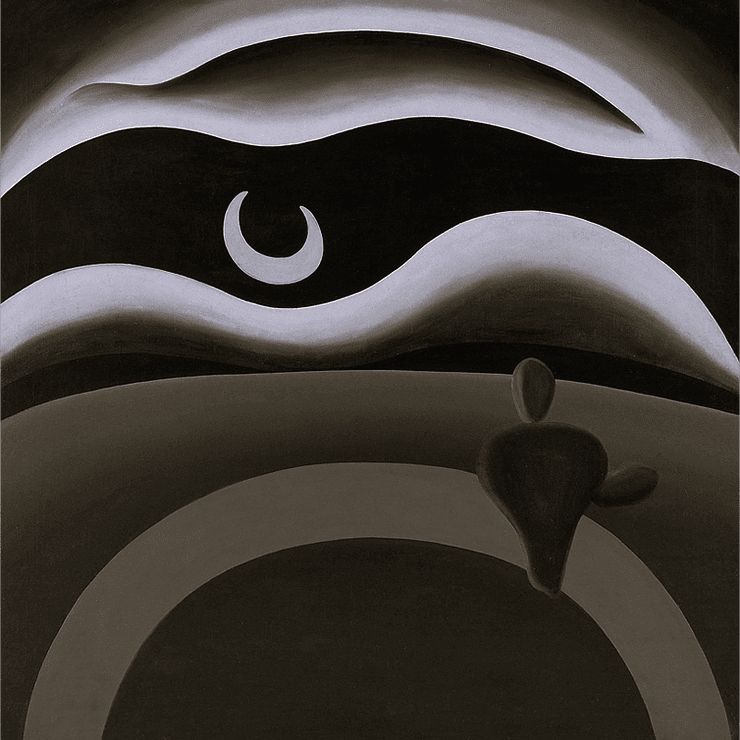
The dark night, with no moonlight or lamplight, seemed like a bottomless pit from which one hears a whispering, come, come…
It was precisely toward the pit that the woman was headed. The ballroom wasn’t that big, not big enough to hold repeated spins. The door was open and wide. She went through it, somewhat blindly, spinning and spinning with no idea where her spins would take her out there in the night. No one noticed the corkscrew-woman’s disappearance, what a shame.
Perhaps after tracing the corkscrew marks across the floor, the waiters would make out the trajectory of the one who maybe had been a ballerina before turning into a corkscrew. She simply went out into the darkness. Her jumbled thoughts echoed the bell’s tolls:
“Ever again, ever again, ever again.”
She spun a great deal until she came upon the deep night and an enormous garden. A quick glance didn’t reveal anyone’s presence. The place seemed like a labyrinth. Several little gardens were nestled inside each other, iron benches here and there for those lost within to rest.
In the labyrinth-garden, she would have spun to death, with no one to help her put on the brakes and stop the fatal movement. She was no longer ballerina or corkscrew, she was a spinning top, a toy set in motion from inside the ballroom by the wretched batman, with his big black wings. If only he had been a raven and not a bat, he would have said something more distinctive. His parting words could have been,
“Nevermore, nevermore...”
But no. He was a bat, and a most rudimentary one. So dry:
“Ever again.”
No ellipsis.
The toy-spinning-top-woman stayed the crazed course. Clouds covered the sky, but she didn’t realize that it might rain because she was keeping her head down and couldn’t see the storm approaching. No moon. She wended into the gardens. Would she spin until her legs no longer worked?
When at last she came to the center of the labyrinth, the spins lost steam. Her puffy skirt grazed the pointy ends of the plants forming the garden walls. She was slowing down bit by bit, her racing heart still spinning in her flip-out.
Her head too continued spinning, as if it weren’t attached to the body that was trying to pull itself together. Near the center of the last garden, a small space filled with greenery and planted white flowers, she was starting to topple over when someone caught her.
The moonless night was a romantic time.
In front of her stood a young man wearing a costume of colorful diamond-shaped patches and painted-on smile and teardrop. He didn’t know whether to smile or cry, like a harlequin. Halfway between joy and sadness. All alone, he was looking for someone. The almost-ballerina-corkscrew-spinning-top woman couldn’t fix her gaze on one clear image. She was seeing several harlequins smiling-crying. It would be a while before she could see without the multiplications that the spinning had created in her head.
Still, she managed to say,
“Who are you?”
He replied,
“I’m a lost harlequin
On an endless, moonless night
With no mate in sight”
The young man only spoke in rhyme. A poet.
Still dizzying, she didn’t know how to poet, especially not in such strange circumstances. She felt self-conscious and kept quiet, suspicious that the nocturnal presence might be an apparition. She didn’t say it, but she thought it.
He repeated his poem, thinking that the still dizzying woman hadn’t heard him:
“I’m a lost harlequin
On an endless, moonless night
With no mate in sight”
She said nothing in return because she didn’t have a cent’s worth of poetry in her purse. The harlequin held the corkscrew-woman about to topple. He thought it best not to ask the reason behind that spinning business.
The woman slowly managed to stand without spinning. It took a while, but the harlequin waited. He had held her firmly until she was able to keep from spinning.
“Thank you,” she said at last.
They sat on a bench in the labyrinth.
How beautifully he spoke his rhymes, she thought. She had never seen a harlequin up close, let alone a poet harlequin. Was he for real? Or was her dizzy head making up people?
She was taken aback when the harlequin stood up, grabbed a guitar he had hidden behind the bench, and fingered a song:
Would it be too late
To ask this pretty columbine
To please be my date?
Finally someone had figured out her attire. She was no ballerina, no corkscrew, no spinning top. She was a columbine fashioned after her own design and now had found someone who could not only name her costume but also welcome her as his partner; she was no longer all alone in the dark.
She nodded a yes—she didn’t want to speak at that moment because she had no verses and her words would get in the way of the night’s poetry. She kept quiet, happy.
The harlequin and the columbine sat in each other’s embrace on the bench in the garden-labyrinth. A fine drizzle started to fall and sprinkled the non-waterproof costumes until they were soaked through. They sat there, wet, feeling the breeze growing stronger and stronger, but not cold or hungry or thirsty. They talked ceaselessly through the night. He speaking in verse, she replying in prose because that was the only currency she had in her purse. The only question was, would they walk into the ballroom? The harlequin sang and the woman danced in the open air of the night. They made their own special ball.
It wasn’t long before her jumbled thoughts, filled with “ever agains,” disappeared, and the columbine finally realized that she could be happy without the memory that one day the batman made her spin-flip-out all the way to the moonless night.
Actually, she didn’t forget about it completely: if it hadn’t been for the bat’s brutal gesture before he flew away, letting her go as hard as one throws a spinning top, perhaps the woman never would have had the courage to come on her own two feet to the very core of the labyrinth and find her true partner.
Not ever again did she see the bat.
Nevermore did she flip-out-spin.
A moonless night holds more surprises than a starry sky.
A Rio de Janeiro native, Claudia Nina is a journalist, author, editor, and literary critic. She holds a Ph.D. in Literary Studies from the University of Utrecht and has authored twenty books of fiction and nonfiction, for children and adults. Her novel Paisagem de Porcelana (Porcelain Landscape) was a 2015 Rio Literary Award finalist and reissued in 2025. Her short stories appear in several Brazilian literary magazines. Claudia is a columnist with the literary journal Rascunho.
Ilze Duarte is a writer and literary translator based in California. She is a recipient of the Sundial House 2024 Literary Translation Award, which included the publication of her translation of Marilia Arnaud’s short story collection The Book of Affects. Her translations appear in Asymptote Journal, Latin American Literature Today, Massachusetts Review, Michigan Quarterly Review, Words Without Borders, and elsewhere. Her debut short story collection The Heart Beats Faster is forthcoming from Betty Books.