BROWSE Columns


✕
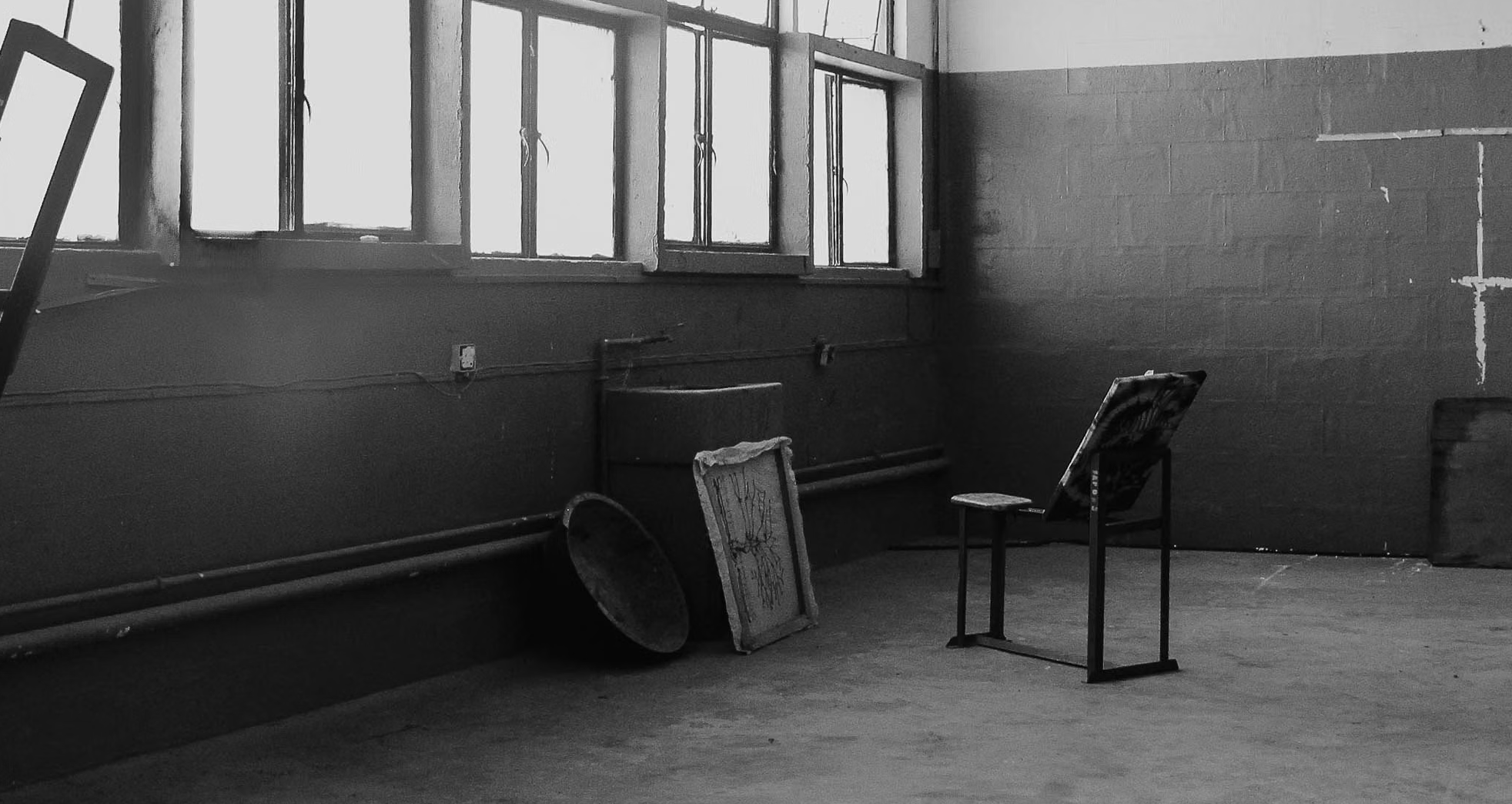


This morning the table holds a diary, left out from when she scribbled in it last night. It helps, she thinks, to get her feelings down about losing the studio. She’s not really a writer, though, is she? She’s an artist; a sculptor. Words were Jim’s medium. Artists – or women, she wonders – aren’t supposed to wield them. But words do come easily to her, even though she can’t necessarily use them to talk about her art works, which are solid, recalcitrant things, resistant to description.
Across the table are three crayons: remnants from a drawing session with Alex, teaching her about primary colours. Something about their relationship to each other there on the surface – self-sufficient, but each one sharpening the effect of the other – reminds her of her sculptures, of what she is trying to get at in allowing them simply to exist.
Anne sighed and shoved the crayons in a plastic toy box that was supposed to live in a drawer but never left the table’s surface; poured another coffee. Right about now, 9am, the kids out at school, she would normally head to the studio, forty minutes away on the bus. Her sanctuary, her – what did Rosa Bonheur call it? her Noah’s Ark – a place where, just arriving at the door and putting the key in the lock, she felt returned to herself.
Just lately, though, she had come to find a kind of peace of mind in accepting that things can’t be held apart. Planning, cooking, helping with homework, making scale drawings, even changing diapers – all had happened on this table. And so much of sculpture was about the idea, anyway, at least at the beginning, experimenting with shape and colour on these pieces of paper now scattered among the morning’s slowly encrusting cereal bowls and half-drunk glasses of milk.
The table is beginning to be layered with touches of colour. A shard of yellow green catches her eye (the colour of grass stains on Alex’s knee), singing out against a pink, where the acrylic paint has escaped the edges of her paper sketches, another mark of what seems to be her increasing disregard for domestic order. It flakes where the wood has splintered – so unlike the smooth surfaces of her sculptures, sanded down and repainted again and again until all trace of her brushwork has disappeared.
This finessing always happened in her studio – among the rats, chill, damp – the place where her ideas and sketches are turned into the tall, rectangular columns of her sculptures. Is this where she lets her artist-self speak (like some nineteenth-century painter starving in his garret, ignoring cold and hunger as he feeds on artistic inspiration)? At home, in her diary, is this where she speaks as a mother? And yet she knows that the way the children arrange themselves anew each time she sees them – a shift in their relative heights, a lengthening of limb – has everything to do with the way lime green gives way to royal blue, and fuchsia bumps up against tangerine, in the horizontal bands of her sculptures. She thinks through colour; feels herself to be colour, sometimes.
She will miss it, this table-as-studio, a surface for writing, sketching, eating,cleaning, playing, calculating. But yes, she had better get up and return Jerry’s call. A new studio space, apparently, opening up on West 46thstreet, where she will be able to work alongside Mary again, be galvanised by their conversations. The words of other women were like food. Mary had given her Barbara Hepworth’s autobiography. For Hepworth, the studio was not an austere retreat, but a place of “children, rocks, sculptures, trees, importunate flowers and washing”. Orthe letters of the German painter Paula Modersohn-Becker, which she devoured just last week at this very table: “I love waking in my studio, seeing my pictures come alive in the light”.
Anne picked up the coffee cup and closed her diary.
But she did not head for the phone in the hallway. An image caught in her mind of Paula’s pictures waking up in the cold light of her attic studio in Paris. That sense of recognition that Paula described in her letters – as though each time she looked at her paintings, she saw, for the first time, what she knew was already there – Anne remembered it from the births of her three children: new to the world but already known, somehow. What must it have been like for Paula, just edging into the twentieth century, alone – scandalously alone – with her paintings? For her, it hadn’t been enough simply to mark out a space to think at the kitchen table. She had crossed a border, detached herself from a husband, to call herself an artist.
She reached across the table, feeling for her sketchbook. Lines started to form the outlines of a structure that she could picture taking shape in her garden. She could see the shape of her studio and what it would hold: high walls, to accommodate the six, eight, feet of her columns; windows, to let in light and warmth; herself, dew-dipped, having crossed the lawn to claim the hours before breakfast.

Linda Goddard is an art historian based at the University of St Andrews in Scotland. Her latest book is Savage Tales: The Writings of Paul Gauguin (Yale University Press, 2019). She has published essays and reviews in journals including PN Review, The Art Newspaper, Art Review, Art Monthly, The Burlington Magazine, and Raw Vision. https://www.instagram.com/lindajgoddard/


